Table of Contents
ToggleAn epidural steroid shot is one of the most trusted ways to calm stubborn hip and leg pain that traces back to irritated nerves in your lower spine. When that nerve irritation becomes the unseen engine behind the pain you feel each time you walk, sit, or bend, the discomfort can overshadow your day. Many people in Houston and nearby areas are surprised to learn that hip pain often starts in the lumbar spine instead of the hip joint itself. When the nerve roots become swollen or inflamed, the pain may travel in a way that feels confusing until a spine expert like Dr. Silky Patel helps you connect the dots.
When a steroid injection targets the inflamed nerve, relief can feel like someone finally opened a pressure valve. Swelling eases, movement feels smoother, and that heavy, aching pull in your hip begins to settle down. Because pain has a way of snowballing into worry, knowing how these treatments work brings confidence. You also get a clearer idea of what to expect, including the possibility of short-term steroid shot side effects that usually fade quickly. Understanding these details helps you walk into your appointment ready, steady, and informed.
Since every person’s spine and hip mechanics tell a different story, Dr. Patel takes time to map out what’s driving your pain. She blends years of specialty training with real-world experience caring for people across Houston who need more than temporary fixes. Her goal is always the same: to help you get back to walking comfortably, sleeping better, and enjoying movement again. Whether your pain began after an injury, long hours at work, or long-standing spine changes, learning how an epidural steroid shot works is the first step toward meaningful relief.
What Is An Epidural Steroid Shot And How Does It Help Hip Pain?
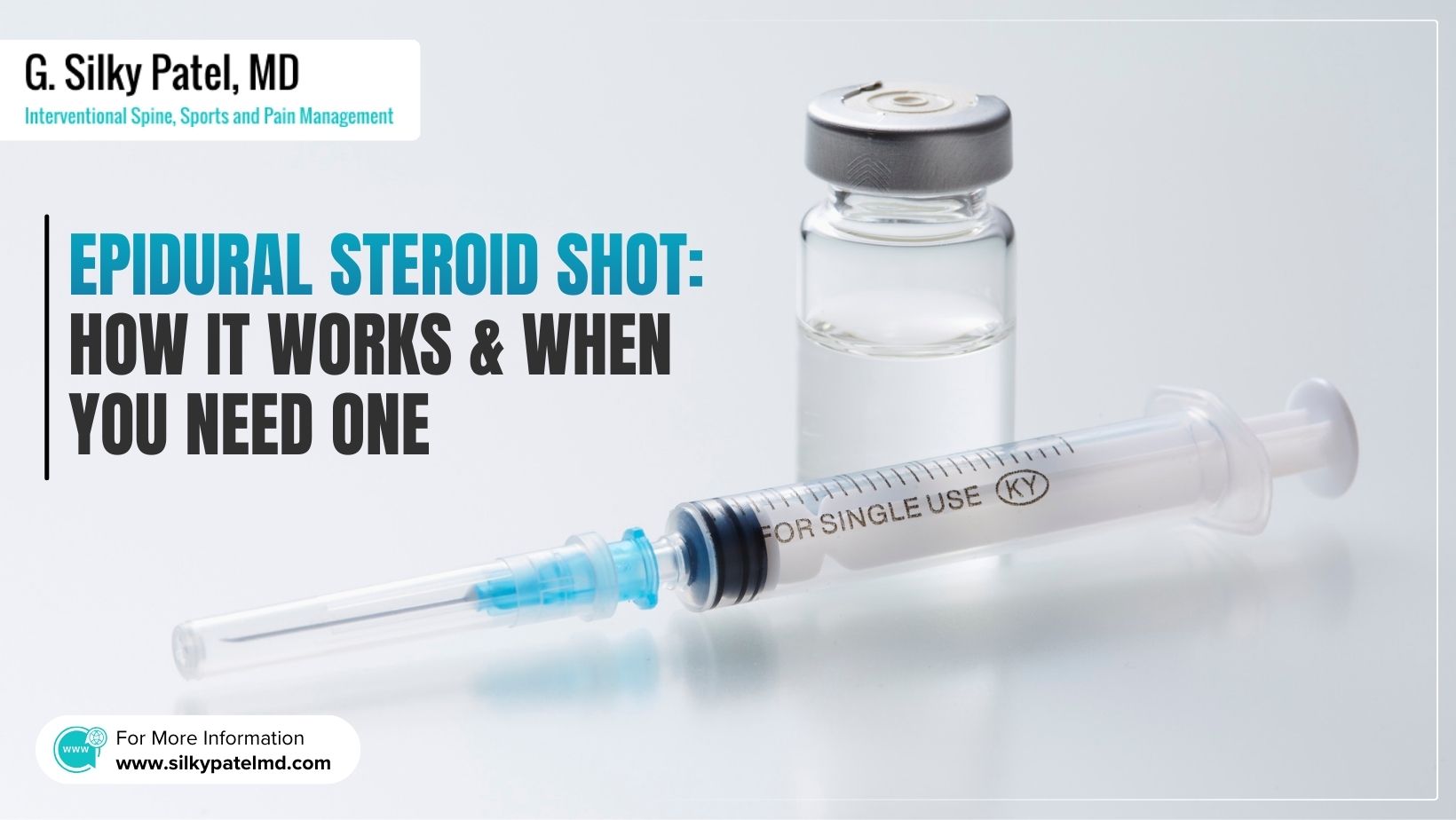
An epidural steroid shot is a targeted treatment that places anti-inflammatory medication directly around irritated spinal nerves. Because these nerves send signals to your hips and legs, irritation in your lower back can feel like hip pain even when the hip joint is not the true source. This treatment aims to quiet the inflammation driving those mixed-up signals so your body can settle into a more natural rhythm of movement.
Understanding How an Epidural Steroid Shot Works in Your Spine
When a spinal nerve becomes inflamed, it swells in a tight space that leaves little room for error. This swelling leads to sharp, burning, or aching pain that may spread from your lower back into your hip. An epidural steroid shot brings medication straight to the compressed nerve root. By calming the inflammation, the pressure eases, circulation improves, and the nerve begins to fire in a more normal pattern. This is why many people feel their hip pain soften within a few days of the steroid injection.
Because the medication works at the source, the relief can feel more direct and meaningful than relying only on pills. Oral medicines have to travel through the entire body, but an epidural steroid shot concentrates the relief where the irritation truly lives.
How Irritated Spinal Nerves Can Cause Hip and Leg Pain
The nerves in your lower back act like cables carrying signals to your hips, legs, and feet. When these cables become inflamed, the signals get distorted. Your hip may ache even though the joint itself is not injured. This type of radiating pain is common in Houston adults who sit for long hours, lift heavy objects, or develop age-related disc changes. Once inflammation builds, simple movements can feel like sparks jumping along the nerve.
Dr. Silky Patel often sees patients who describe hip pain that feels deep, stubborn, and hard to pinpoint. They are often surprised when imaging shows the real issue hiding in the spine. Once the irritated nerve is treated with a precise steroid injection, the hip pain usually begins to fade.
Epidural Steroid Shot vs Other Steroid Injection Types
It’s easy to confuse an epidural steroid shot with other types of steroid injection options, but they work in very different locations. An epidural shot goes into the epidural space around the spinal nerves. A joint-based steroid injection, on the other hand, is placed directly into the hip joint itself. If your pain comes from the joint, a different type of treatment may be appropriate. When it comes from an inflamed spinal nerve, only an epidural steroid shot can reach the true source.
This difference matters because a person with hip pain may receive the wrong treatment if the source is misunderstood. Dr. Patel focuses on identifying the exact pain generator before recommending any form of steroid injection so you get the right relief the first time.
When Hip Pain Is Actually Coming from Your Lower Back
Many people in Houston experience hip pain that actually stems from problems such as a herniated disc, spinal stenosis, or lumbar radiculopathy. When these conditions compress a nerve, the pain can wrap around the hip in a way that mimics arthritis or muscle strain. This is why thorough evaluation is important before any injection. Once the spinal source is found, an epidural steroid shot can create a calmer environment for the nerve to heal.
While most people do well after this treatment, it’s also normal to have mild steroid shot side effects, such as temporary soreness or a brief flare in symptoms. Some may even notice a mild reaction to steroid injection medication like facial warmth or trouble sleeping for a night. A steroid shot reaction of this type is usually brief and signals the body processing the medication. Dr. Patel explains these details ahead of time so you know exactly what to expect and when to reach out if anything feels unusual.
When an Epidural Steroid Shot Makes Sense for Hip Pain in Houston
An epidural steroid shot becomes a helpful option when hip pain refuses to settle down and the real irritation is coming from the lower spine. Many people across Houston, Katy, Sugar Land, and nearby neighborhoods feel hip pain that actually begins with nerve inflammation deep in the lumbar region. When those nerves become crowded or compressed, the discomfort can travel into the hip in surprising ways. Because this pattern is so common, Dr. Silky Patel studies the spine and hip relationship carefully before recommending any steroid injection.
Once the irritated nerve is identified, an epidural steroid shot can help break the cycle of swelling and pain so you can move freely again. For many adults, the relief feels like lifting a weight they have carried for months. Even when mild soreness develops as part of typical steroid shot side effects, the overall improvement usually outweighs the temporary discomfort.
Hip and Leg Pain Conditions That May Benefit From an Epidural Steroid Shot
Lumbar Radiculopathy, Sciatica, and Pain Radiating into the Hip
Lumbar radiculopathy happens when a spinal nerve becomes irritated or compressed. The pain often spreads into the hip or outer thigh, making everyday movements feel sharp or dragging. People often assume they have a hip problem until Dr. Silky Patel shows them how the nerve pathway links directly to their symptoms. Once the inflammation is targeted with a precise steroid injection, the radiating pain tends to fade gradually.
Herniated Discs, Spinal Stenosis, and Degenerative Changes
A herniated disc, age-related narrowing, or general wear-and-tear can squeeze nerve roots and trigger hip discomfort. In these cases, an epidural steroid shot aims at the swollen nerve so the pressure eases. Because the medication works exactly where the irritation sits, the relief can feel much deeper than relying on oral pain medicine alone.
Hip Pain After Injury or Overuse That Involves the Low Back
Some hip pain starts after lifting, twisting, or a minor fall. Even when the hip seems to be the source, the injury may have irritated the low back instead. Once swelling builds around a nerve, the pain may trick you into thinking the hip is injured. Dr. Patel sees this pattern often in active adults around Houston, and she uses an epidural steroid shot when the irritated nerve needs targeted calming.
Who May Be a Good Candidate for an Epidural Steroid Shot in Houston and Nearby Areas
When Home Care, Medications, and Physical Therapy Haven’t Helped Enough
Most people try ice, stretching, rest, and medication before seeking an injection. If these don’t provide steady relief, an epidural steroid shot can give the irritated nerve the quiet environment it needs to reset. Many Houston patients reach this stage after weeks or months of pain that simply will not let up.
When Hip Pain Limits Walking, Work, or Sleep
Pain that interrupts sleep or daily movement is a strong sign that the nerve needs focused treatment. When the irritation becomes disruptive, an epidural steroid shot offers a chance to break the cycle so you can get back to normal routines without constant discomfort.
When an Epidural Steroid Shot May Not Be the Right Choice
Red Flags and Medical Reasons to Avoid Steroid Injection
Some people have conditions that make a steroid injection less suitable. This may include certain infections, medical instability, or situations where the risks outweigh the benefits. When Dr. Patel evaluates you, she looks for these markers to ensure that the epidural steroid shot is both safe and effective.
When Dr. Silky Patel May Recommend Alternative Approaches Instead
Sometimes the hip joint itself is the main source of pain, and the spine is not involved. In those cases, a different type of treatment provides better results. Dr. Patel always designs the plan around your exact pain generator so you get the right support at the right time. If she finds that your pain is unrelated to nerve irritation, she will guide you toward options that match your situation.
What to Expect Before, During, and After Your Epidural Steroid Shot With Dr. Silky Patel
When you arrive for your appointment, knowing what will happen removes worry and builds confidence. Dr. Silky Patel focuses on clarity, comfort, and care throughout the entire process, from your first visit to your follow-up after the steroid injection. She helps you understand normal steroid shot side effects, what a mild steroid shot reaction might feel like, and the expected healing timeline so you walk in prepared and walk out reassured.
Your First Visit: History, Exam, and Imaging for Hip and Back Pain
Connecting Hip Symptoms to Spinal Nerve Irritation
Your visit begins with a detailed conversation about your pain: when it started, how it feels, and what makes it worse. Hip pain that comes from the spine often behaves differently from true hip-joint pain. Dr. Patel examines both areas to understand exactly how your body moves. If the nerve pathway suggests a spinal cause, imaging helps confirm the source before recommending an epidural steroid shot.
Reviewing Medications and Health Conditions Before a Steroid Injection
Before any procedure, Dr. Patel reviews your medications, chronic conditions, and overall health. This step ensures you are a good candidate for an injection and reduces the risk of an unexpected reaction to steroid injection medication. She explains each step so you feel informed instead of anxious.
Step-by-Step: How an Epidural Steroid Shot Is Done
Check-In and Getting Comfortable at the Houston Clinic
When you arrive at the Houston office, the team guides you through check-in and helps you settle into a calm, private setting. Dr. Patel reviews the plan again to make sure all your questions are answered.
Positioning, Numbing, and Image Guidance for the Injection
You are positioned comfortably so Dr. Patel can access the epidural space with precision. A numbing medicine helps the area feel more comfortable. Using imaging guidance, she directs the medication exactly where the irritated nerve needs it, which helps maximize relief and minimize the chance of a significant steroid shot reaction.
What You May Feel During the Steroid Injection
Most people describe the injection as pressure, a warm sensation, or a brief increase in symptoms as the medication enters the space. These feelings typically fade quickly. A small number may notice temporary changes like tingling or heaviness, which are normal and not considered harmful.
After Your Epidural Steroid Shot: Recovery, Activity, and Follow-Up
Normal Soreness and Short-Term Changes in Hip or Leg Pain
Some people feel a mild ache for a day or two. Others may notice temporary shifts in hip or leg discomfort as the medication settles. These are common steroid shot side effects and usually fade on their own. Dr. Patel explains what to expect so you don’t mistake regular healing for a concerning problem.
When You Can Walk, Drive, and Return to Work Around Houston
Most patients can walk shortly after the procedure. Driving and work may depend on how your body responds, but many people return to their routine within a short time. If you notice a mild reaction to steroid injection medication—such as facial warmth or restlessness—it usually fades within a day.
Boosting Results: Pairing an Epidural Steroid Shot With Rehab
Physical Therapy and Targeted Exercises for Hip and Core
Once your pain calms, strengthening your core and hips helps keep the relief going. Dr. Patel often recommends gentle physical therapy to improve stability and prevent the inflammation from returning.
Lifestyle Changes That Support Longer-Lasting Pain Relief
Simple habits like stretching, changing posture, staying active, and reducing long periods of sitting can help maintain the benefits of an epidural steroid shot. Dr. Patel guides you through these changes so your progress becomes long-term.
Steroid Shot Side Effects: What’s Normal and What’s Not
Every treatment comes with expectations, and understanding steroid shot side effects helps you feel prepared instead of surprised. When you receive an epidural steroid shot for hip pain that stems from the lower back, your body may respond in different ways as the medication settles. Most of these changes are temporary and reflect the natural adjustment process. Dr. Silky Patel spends time explaining each possibility so you can stay confident during recovery.
Some people notice subtle changes in the first few hours, while others experience them the next day. Even though a mild steroid shot reaction can catch you off guard, it generally fades on its own. Knowing the difference between normal sensations and concerning symptoms helps you stay calm and aware as your body works through the effects of the steroid injection.
Common Steroid Shot Side Effects Most People Notice
Temporary Increase in Pain or “Steroid Flare”
A brief increase in pain can happen when the medication first enters the inflamed area. The nerve may react with extra sensitivity before settling down. This flare often lasts only a short time and is not considered harmful. Dr. Patel sees this pattern often in Houston patients and reassures them that it signals the medication beginning its work.
Numbness, Tingling, or Leg Heaviness After the Injection
Because the medication sits near the nerve, temporary sensations like heaviness or tingling sometimes appear. These usually fade within hours and represent a normal part of the steroid injection process.
Facial Flushing, Headache, or Trouble Sleeping
Some people experience warmth in their face, a mild headache, or restlessness the night of the procedure. These symptoms are common steroid shot side effects and typically disappear quickly without additional treatment.
Understanding a Reaction to Steroid Injection
What a Mild Steroid Shot Reaction Feels Like
A mild reaction to steroid injection medication often feels like facial warmth, a racing feeling, or temporary fatigue. These sensations may appear suddenly and fade just as quickly. Many people describe it as a passing wave of symptoms rather than lasting discomfort.
How Long a Typical Reaction to Steroid Injection Usually Lasts
A mild steroid shot reaction generally lasts a few hours to a day. Some patients never notice any reaction at all. Dr. Patel explains what your body may experience so you know what fits the normal recovery window.
Serious Steroid Shot Reaction: Warning Signs to Act On
Symptoms That Need Urgent Medical Attention
Most reactions are mild, but rare complications can occur. If your body shows unusual patterns such as increasing weakness, uncontrolled pain, or signs of infection at the injection site, you should contact medical care. These symptoms do not reflect typical steroid shot side effects and require prompt evaluation.
Infection, Bleeding, or Nerve Problems After a Steroid Injection
Rare but serious complications may include infection, excessive bleeding, or nerve irritation beyond expected soreness. Dr. Patel reviews your health history carefully to reduce these risks and discusses warning signs before your epidural steroid shot so you know what to watch for.
Long-Term Safety and Limits on Steroid Injections
How Often You Can Safely Have an Epidural Steroid Shot
Most people can safely receive several injections per year, depending on their overall health and the pattern of their symptoms. Spacing out each epidural steroid shot gives your body time to benefit from the previous one.
Steroid Injection Risks for Bones, Blood Sugar, and Hormones
Long-term use of steroid injections can affect blood sugar, bone density, or hormonal balance. These risks are uncommon with occasional procedures, especially when supervised by a specialist like Dr. Silky Patel who tailors your treatment schedule to your individual needs.
Epidural Steroid Shot vs Other Hip Pain Treatments
Hip pain can come from several sources, so finding the right treatment begins with accurate diagnosis. An epidural steroid shot helps when the true source is an irritated nerve in the lower spine. Other treatments may be more effective when the hip joint or surrounding soft tissues are the primary problem. Understanding how each option works helps you choose the most effective path with guidance from Dr. Silky Patel.
When the pain stems from the lumbar region, treating the hip alone won’t create lasting relief. This is why many Houston patients finally improve once an epidural steroid shot targets the inflamed nerve directly. Knowing how each treatment compares helps remove confusion and builds trust in the plan you follow.
Epidural Steroid Shot vs Hip Joint Steroid Injection
When the Problem Is in the Hip Joint Itself
When the hip joint is inflamed or arthritic, placing medication directly into the joint may offer better relief. This type of steroid injection aims at the joint structures rather than the spinal nerves.
When the Problem Is in the Spine but Pain Is Felt in the Hip
If the pain originates in the spine, a joint injection will miss the true source. An epidural steroid shot reaches the irritated nerve roots, allowing the hip pain to fade as the inflammation decreases. Dr. Patel distinguishes between these patterns so you receive the right approach at the right time.
Epidural Steroid Shot vs Medications and Physical Therapy
Where Oral Medicines and Topical Treatments Fit In
Pain-relieving medicines can reduce inflammation throughout the body, but they do not target the irritated nerve as precisely as an epidural steroid shot. They work best for short-term control or mild symptoms.
How Physical Therapy Supports or Replaces Steroid Injections
Physical therapy can strengthen the spine and hip mechanics, which supports long-term improvement. In some cases, therapy alone is enough. In others, pairing therapy with a precise steroid injection enhances relief and speeds progress.
What If an Epidural Steroid Shot Doesn’t Help Enough?
Repeating an Epidural Steroid Shot: When It May Make Sense
Some people respond best after a series of injections spaced over time. If the first injection provides partial improvement, Dr. Patel may recommend a follow-up procedure to build on that progress.
Advanced Options Dr. Silky Patel May Consider for Stubborn Hip and Back Pain
If pain continues after several injections, other interventions may be needed. Dr. Patel uses her extensive background in spine care to design a plan that reflects your unique condition and long-term goals.
Results You Can Expect With Dr. Silky Patel in Houston
The relief from an epidural steroid shot varies based on your body, the severity of nerve irritation, and how long the inflammation has been affecting your movement. Many people in Houston describe a sense of ease within a few days, while others notice gradual improvement over a couple of weeks. When the irritated nerve finally calms, hip pain begins to loosen its grip and your daily routine becomes more manageable.
Dr. Silky Patel focuses on long-term results rather than temporary fixes. By addressing the source of the inflammation and guiding you through the recovery process, she creates a treatment experience that supports both healing and mobility.
How Long Relief From an Epidural Steroid Shot Can Last
Typical Timelines for Pain Relief After a Steroid Injection
Relief may begin within a few days, though full improvement can take one to two weeks. The medication continues working as inflammation decreases around the nerve.
Why Results Vary From Person to Person
Your overall health, the severity of the irritation, and how long the nerve has been inflamed all influence how long the relief lasts. Some people enjoy weeks or months of comfort before considering another injection.
Measuring Success: What “Better” Looks Like in Daily Life
Walking, Working, and Sleeping With Less Hip Pain
Relief becomes clear when walking feels smoother, getting out of bed requires less effort, and work activities no longer spark intense hip pain. These everyday improvements signal that the nerve is responding well to the epidural steroid shot.
Getting Back to Life in Houston, Katy, Sugar Land, and Nearby Areas
Feeling better means returning to hobbies, family outings, and daily routines. As the inflammation fades, life around Houston becomes easier and more enjoyable.
Planning Next Steps With Dr. Patel
When to Consider a Second Epidural Steroid Shot
If your pain decreases but does not disappear completely, a second epidural steroid shot may enhance the results. Dr. Patel evaluates your progress before recommending any next step.
When to Shift the Focus to Long-Term Hip and Spine Management
Sometimes the best long-term plan includes strengthening, posture training, and lifestyle adjustments. Dr. Patel helps you build a roadmap that keeps you moving comfortably long after the initial inflammation settles.
A Note from Dr. Silky Patel
Caring for patients who struggle with radiating hip and back pain has always been personal to me. I understand how frustrating it feels when everyday tasks become harder because your body isn’t cooperating. When I recommend an epidural steroid shot, it’s because I have carefully mapped out the relationship between your spine, your hip, and the way your pain behaves. My goal is never to chase symptoms but to treat the source with clarity and intention. By placing the medication exactly where the nerve is inflamed, we give your body the chance to calm down and recover without unnecessary discomfort.
Many people worry about steroid shot side effects, and I take time to explain each possibility. Most of these responses are mild and temporary, such as a brief steroid shot reaction or temporary soreness from the steroid injection. These sensations often fade quickly as the inflammation settles. If you ever notice a reaction to steroid injection medication that feels unusual, I want you to reach out right away so we can make sure everything is progressing as expected.
My care philosophy is built around partnership. I want you to feel confident and supported every step of the way, from the first evaluation to the relief that follows. Whether you live in Houston, Katy, Sugar Land, or a surrounding community, I am committed to helping you move without fear, sleep without pain, and return to the activities that bring meaning to your life. Relief is possible, and I am here to guide you toward it with compassion, clarity, and experience.