PRP Injections in Houston, Texas

Home PRP Injections in Houston

Board-Certified Pain Management Physician - Dr. Silky Patel MD

Image-Guided PRP Evaluation for Musculoskeletal and Spine-Related Pain

Board-Certified Pain Management Physician

When Persistent Pain Keeps Returning With Activity

Daily Challenges That May Prompt a PRP Consultation

Daily Challenges That May Prompt a PRP Consultation - Dr. Silky Patel MD

Understanding PRP Injections

PRP is not selected because a patient wants a particular procedure. Before PRP injections are discussed, Dr. Patel determines whether the pain pattern, target structure, and prior care make PRP reasonable to discuss.

PRP as Orthobiologic Option

PRP injections are an orthobiologic option used within musculoskeletal and spine care. Its role is symptom-focused and diagnosis-dependent rather than a promise of structural change.

Joint-Related PRP Injections

Selected joint-related pain patterns involving areas such as the knee or hip region may be evaluated for PRP. The decision depends on the diagnosis, severity, activity goals, and other available options.

Tendon-Related PRP Injections

PRP injections may be considered for certain tendon-related symptoms after evaluation and diagnosis, particularly when a clear tendon target is present and rehabilitation has not provided enough symptom improvement.

Ligament, Fascia, and Muscle Targets

Depending on the diagnosis, Dr. Patel may discuss image-guided PRP injections for selected ligament, fascia, or muscle-related pain patterns. The target is defined during evaluation.

Cervical and Lumbar Facet Applications

Within spine care, selected cervical or lumbar facet-related pain patterns may be evaluated for PRP as part of a broader management plan. Patient selection is based on clinical findings and diagnosis.

Image-Guided Injection Placement

Ultrasound or fluoroscopy may be used depending on the structure. Image guidance helps place PRP at the selected target and supports procedural precision.

Wondering Whether PRP Fits Your Diagnosis?

A consultation can help determine whether PRP, another pain-management option, or continued rehabilitation is a reasonable next step for your symptoms.

Is Pain Returning Every Time You Increase Activity?

Pain Patterns That May Lead to PRP Evaluation

Common Factors Dr. Patel Reviews Before the Procedure

Common Factors in B12 Injection Candidacy

Common Factors Dr. Patel Reviews Before the Procedure - Dr. Silky Patel MD

When Should You See a PRP Specialist?

A PRP consultation is most useful when a pain source has been evaluated and you want to understand whether this option belongs in a broader care plan.

silky-patel-about-1
Dr. Silky Patel, MD

Interventional Spine & Pain Management Specialist

Make Candidacy the First Decision

Dr. Silky Patel’s Approach to PRP Injections

Dr. Silky Patel begins with the pain generator. She reviews where symptoms occur, what loads or movements reproduce them, which structures are tender or limited on examination, and what prior care has already been attempted.

When PRP injections are a reasonable option, she explains the intended target and how the procedure fits with rehabilitation, activity progression, and other symptom-management strategies.

During the procedure, PRP is placed at the selected area using ultrasound or fluoroscopic guidance when appropriate. The procedure is tailored to the joint, tendon, ligament, fascia, muscle, or facet-related target identified during evaluation.

Follow-up focuses on pain and function. PRP is designed to support the body’s natural healing response, may help reduce pain or improve function in certain patients, and is used as an option to help decrease pain and inflammation. Results vary depending on the patient and condition.

Find Out Whether PRP Belongs in Your Care Plan

A diagnosis-focused consultation can help you understand whether PRP is appropriate, what area would be targeted, and what alternatives should also be considered.

Benefits

A Targeted Procedure With Realistic Expectations

Put Yourself in Great Hands!

Diagnosis-based PRP candidacy evaluation

Clear identification of the intended musculoskeletal or spine-related target

Ultrasound or fluoroscopic guidance when appropriate

Individualized preparation and activity instructions

Coordination with rehabilitation and gradual activity progression

Follow-up focused on pain, inflammation, mobility, and function

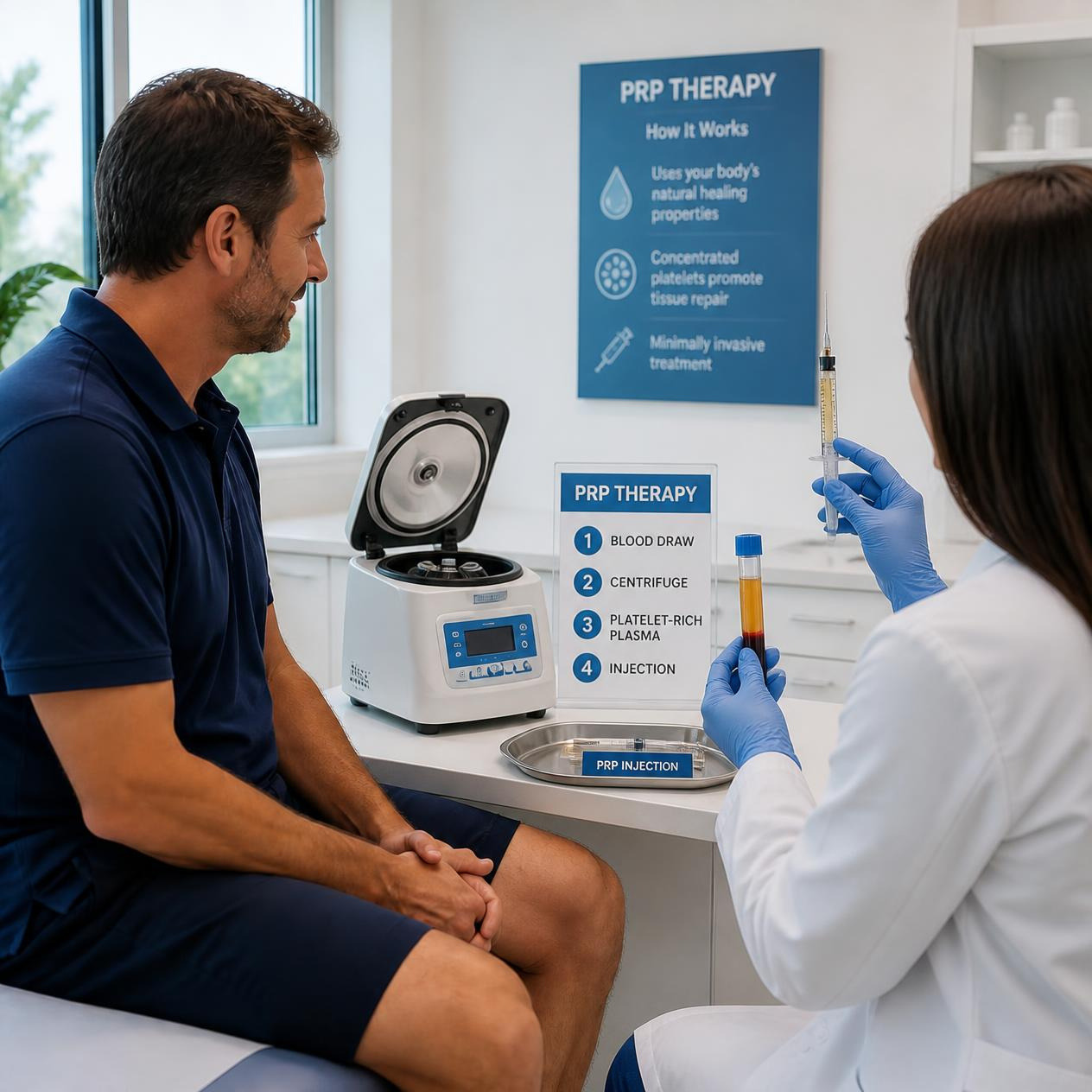
PRP Injection Process in Houston

The details vary according to the target, but the overall pathway includes diagnosis, image-guided placement, and individualized aftercare.

Evaluation and Candidacy

Dr. Patel reviews symptoms, examination findings, imaging when relevant, previous care, medications, and functional goals. PRP is considered only when evaluation and diagnosis identify a specific musculoskeletal or selected spine-related target and the patient is an appropriate candidate.

Choosing a Target

The intended target may involve a joint, tendon, ligament, fascia, muscle, or selected facet-related structure. The decision is based on the clinical findings rather than the location of pain alone, because nearby structures can produce similar symptoms.

Pre-Procedure Planning

Before the appointment, Dr. Patel reviews individualized preparation instructions, medications, activity expectations, and the planned image-guidance method. Patients also discuss the potential risks, limitations, and the fact that results vary depending on the patient and condition.

Image-Guided PRP Injection

PRP is placed at the selected target using ultrasound or fluoroscopic guidance when appropriate. The procedure is designed to support the body’s natural healing response and may help reduce pain or improve function in certain patients.

Activity and Recovery Guidance

Temporary soreness can occur after a PRP injection. Dr. Patel provides individualized instructions about activity, exercise, rehabilitation, and gradual progression based on the target and the patient’s response.

Follow-Up and Functional Reassessment

Follow-up is used to review pain, inflammation, mobility, and function over time. Results vary depending on the patient and condition, and decisions about rehabilitation or additional care are based on the individual response and ongoing evaluation.

Discuss PRP Injections With Dr. Silky Patel

If persistent joint, tendon, or selected spine-related pain is limiting your activity, Dr. Silky Patel can evaluate whether PRP may be appropriate based on your diagnosis, prior care, and goals.

Discuss B12 Shots With Dr. Silky Patel - Dr. Silky Patel MD
Save Time and Summarize with AI

FAQs - PRP Injections

What are PRP injections?

PRP injections are an orthobiologic procedure-based option considered within musculoskeletal and spine care. Dr. Patel uses PRP only after evaluation and diagnosis identifies an appropriate target.

What is the goal of PRP?

PRP is designed to support the body’s natural healing response and is used as an option to help decrease pain and inflammation. It may help reduce pain or improve function in certain patients, and results vary depending on the patient and condition.

Can PRP be considered for joint pain?

Yes, selected joint-related pain patterns may be evaluated for PRP. Candidacy depends on diagnosis, symptoms, prior care, imaging when relevant, and functional goals.

Can PRP be considered for tendon pain?

Certain persistent tendon-related symptoms may lead to a PRP consultation when a clear target is present. Patient selection is based on evaluation and diagnosis.

Can PRP be used in spine care?

Dr. Patel may evaluate selected cervical or lumbar facet-related, fascia, muscle, or ligament pain patterns for PRP within a broader spine-care plan.

Is PRP injection image guided?

Ultrasound or fluoroscopy may be used depending on the target. Image guidance helps direct the injection to the selected structure.

What is recovery like after PRP?

Recovery depends on the area injected and the patient’s clinical situation. Temporary soreness can occur, and Dr. Patel provides individualized activity and rehabilitation guidance.

How quickly will I know if PRP helped?

There is no universal timeline. Symptom response varies depending on the patient and condition, and follow-up focuses on changes in pain and function over time.

How do I know whether PRP is right for me?

A consultation is required. Dr. Patel reviews the diagnosis, target structure, prior care, medical factors, risks, and goals before deciding whether PRP is an appropriate option.