Table of Contents
ToggleRadio frequency ablation has become one of the most talked-about options for long-lasting pain relief in Houston, especially for people who feel stuck between temporary injections and major surgery. If neck, back, knee, or joint pain keeps resurfacing despite multiple treatments, this approach often stands out because it focuses on the nerves actually carrying the pain signal rather than masking discomfort at the surface. Across Houston and nearby communities such as Katy, Sugar Land, Pearland, Cypress, and The Woodlands, Radio frequency ablation is increasingly viewed as a practical middle ground between short-term relief and invasive procedures.
Chronic pain has a way of quietly taking over daily life. Long drives through Houston traffic feel exhausting, sleep becomes fragmented, and even simple movements start to require mental preparation. Radio frequency ablation is designed around a simple idea: if the pain signal itself can be interrupted, the body has a better chance to move, rest, and function normally again. That focus on the source of pain is why radio frequency ablation continues to gain traction among people looking for durable relief without relying on daily medications.
At Dr. Silky Patel’s Houston-based practice, radio frequency ablation is approached as part of a thoughtful, individualized plan rather than a routine procedure. The goal is not just pain reduction, but restoring confidence in movement and daily activity. Understanding how radio frequency ablation works lays the groundwork for deciding whether it belongs in a long-term pain strategy.
Radio Frequency Ablation in Houston: What It Is and How It Works
What radio frequency ablation actually means
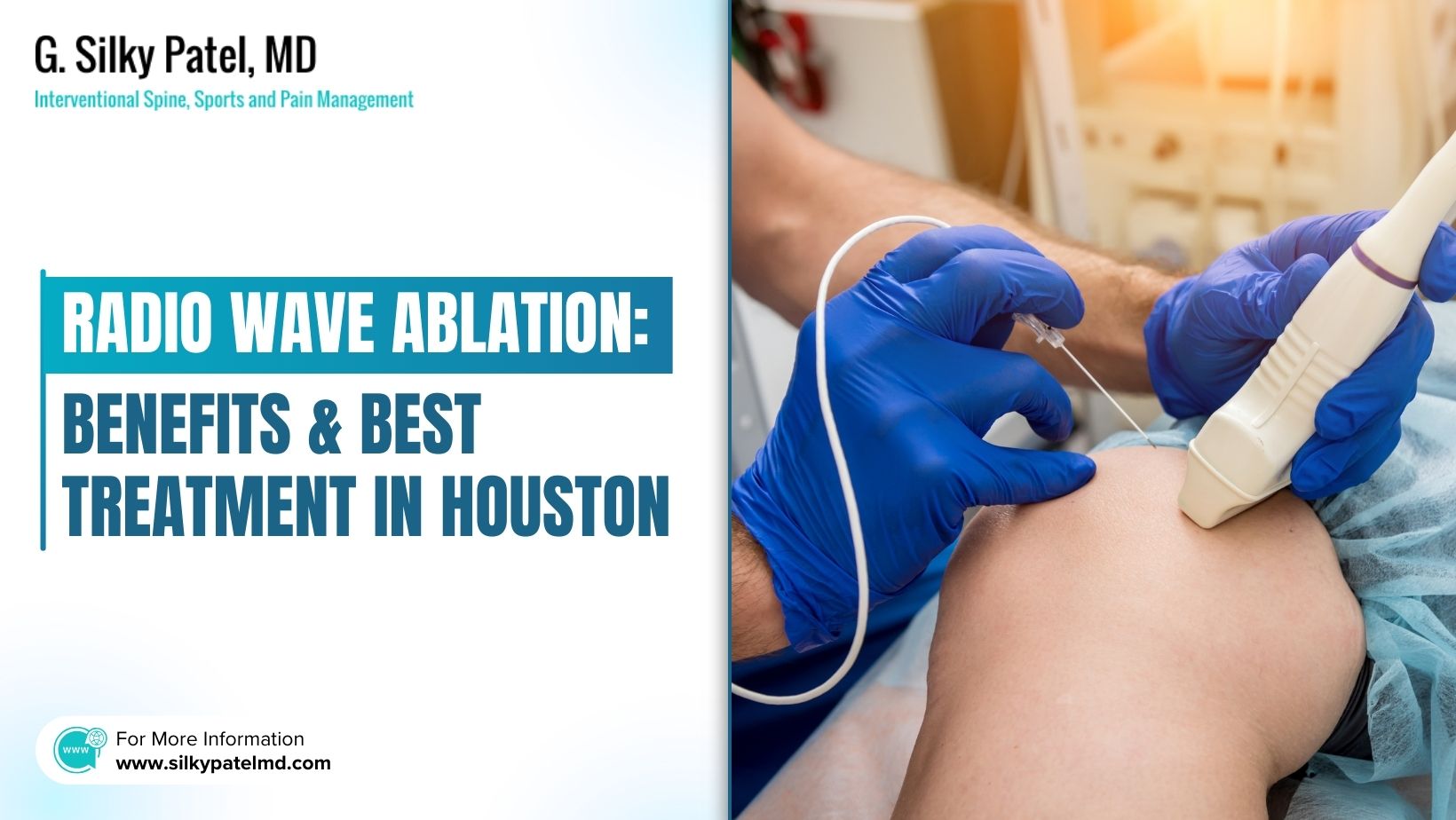
Radio frequency ablation is a targeted pain treatment that uses controlled heat created by radio waves to disrupt specific nerves responsible for transmitting pain signals to the brain. These nerves are sensory in nature, which means the treatment focuses on pain relief without interfering with muscle strength or coordination. The heat used in radio frequency ablation is delivered through a thin probe placed with imaging guidance, allowing for accuracy and consistency.
You may also see this approach referred to as radioablation or radiation frequency ablation when researching pain treatments online. In the context of musculoskeletal and nerve-related pain, these terms generally describe the same principle. What matters most is how precisely radio frequency ablation is performed and whether the correct nerve is targeted.
How radio frequency nerve ablation interrupts pain signals
Radio frequency nerve ablation works by creating a small, controlled thermal lesion along the nerve carrying pain information. Instead of removing the nerve, radio frequency ablation weakens its ability to send repetitive pain signals. A helpful way to picture this is imagining a volume dial being turned down rather than a switch being shut off completely.
This technique is particularly effective for facet joint pain in the neck and lower back, sacroiliac joint pain, and certain knee or hip pain patterns. In these cases, Radio frequency nerve ablation focuses on nerves that are known to consistently contribute to chronic pain. Over time, nerves can regenerate, which explains why radio frequency ablation may be repeated if symptoms gradually return.
The role of Radio frequency injections before ablation
Many people first encounter pain relief through Radio frequency injections or other numbing procedures. These injections are often used diagnostically to confirm whether a specific nerve is responsible for the pain pattern. While Radio frequency injections may offer temporary relief, radio frequency ablation is designed to extend that relief by addressing the nerve’s ability to transmit pain.
At Dr. Silky Patel’s Houston clinic, this step-by-step approach helps ensure radio frequency ablation is used intentionally. When diagnostic responses are clear, radio frequency ablation can be directed with greater confidence and precision.
Radio frequency surgery versus traditional surgery
The terms radio frequency surgery and radio ablation surgery often cause confusion. Despite the wording, radio frequency ablation is not considered traditional surgery. There are no large incisions, no removal of bone, and no prolonged hospital stays. The phrase radio frequency surgery simply reflects the technical application of radiofrequency energy rather than an open surgical procedure.
Understanding this distinction helps patients feel more comfortable when exploring treatment options. Radio frequency ablation is minimally invasive, image-guided, and typically performed on an outpatient basis, making it very different from conventional surgical approaches to pain.
Why precision matters for radio frequency ablation in Houston
The effectiveness of radio frequency ablation depends heavily on accuracy. Targeting the wrong nerve can limit results, even if the technique itself is sound. That is why careful correlation between symptoms, physical findings, imaging, and diagnostic testing is essential before proceeding.
Dr. Silky Patel emphasizes precision when performing radio frequency ablation for Houston-area patients. By aligning clinical details with daily pain patterns, radio frequency ablation becomes a strategic intervention rather than a trial-and-error solution. When applied thoughtfully, radio frequency ablation can shift chronic pain from dominating everyday life to becoming far more manageable.
What Radio Frequency Ablation Treats Best in Houston-Area Patients
Facet joint pain in the neck and lower back
Radio frequency ablation is especially well suited for facet joint pain, which commonly affects the cervical and lumbar spine. Facet joints are small stabilizing joints that can become irritated through arthritis, repetitive strain, prior injuries, or age-related wear. When these joints are the pain generator, discomfort often feels deep, achy, and worse with twisting, bending, or prolonged standing.
In these cases, radio frequency nerve ablation targets the medial branch nerves that supply sensation to the facet joints. By interrupting those pain signals, radio frequency ablation can significantly reduce daily stiffness and movement-related pain. For many Houston-area patients who struggle with long commutes or desk-based work, this relief can translate into easier mornings and improved mobility throughout the day.
Sacroiliac joint pain and lower back instability
Sacroiliac joint pain is another area where radio frequency ablation plays a valuable role. This type of pain often sits low in the back and can radiate into the hips or upper thighs, making walking, climbing stairs, or standing from a seated position uncomfortable. Because sacroiliac joint pain can mimic other lower back conditions, precise diagnosis is essential.
Radio frequency ablation, sometimes referred to as radioablation in this context, focuses on the lateral branch nerves associated with the sacroiliac joint. When diagnostic radio frequency injections confirm the joint as the source, radio frequency ablation can offer longer-lasting relief than injections alone. This approach is commonly used for patients across Houston suburbs who have persistent low back pain despite physical therapy or medication.
Knee, hip, and shoulder pain tied to specific nerves
Radio frequency ablation is not limited to the spine. It is increasingly used for knee, hip, and shoulder pain when the discomfort is driven by identifiable nerve pathways. Knee pain related to arthritis is a common example, particularly for people who want pain relief but are not ready for joint replacement or have lingering pain after surgery.
In these situations, radio frequency nerve ablation targets sensory nerves around the joint without altering joint structure. This makes radio frequency ablation an appealing option for maintaining activity levels while avoiding more invasive interventions. At Dr. Silky Patel’s Houston practice, careful nerve mapping helps ensure radio frequency ablation is directed toward the structures most responsible for pain.
When pain is nerve-driven versus structural
One of the most important aspects of deciding on radio frequency ablation is determining whether pain is primarily nerve-driven. Conditions involving instability, fractures, or significant mechanical damage may not respond as well to radio frequency ablation alone. This is why diagnostic testing and imaging play a critical role before moving forward.
Radio frequency surgery terms are sometimes used broadly online, but in pain care, radio frequency ablation is most effective when pain follows predictable nerve patterns. When that alignment is present, radio frequency ablation can become a powerful tool rather than a temporary experiment.
The Benefits That Make Radio Frequency Ablation a Go-To Option
Longer-lasting relief compared with short-term treatments
One of the most recognized benefits of radio frequency ablation is the duration of pain relief. While radio frequency injections may provide relief lasting days or weeks, radio frequency ablation often delivers months of reduced pain by directly disrupting nerve signaling. This extended effect is why many patients view radio frequency ablation as a step forward rather than a repeat of temporary measures.
For people juggling work, family, and daily responsibilities across Houston, longer-lasting relief can mean fewer interruptions and less dependence on frequent medical visits. Radio frequency ablation helps shift pain management from constant maintenance to more sustained control.
Minimally invasive approach without traditional surgery
Despite being labeled at times as radio frequency surgery or radio ablation surgery, radio frequency ablation is minimally invasive. There are no large incisions, no implanted hardware, and no extended recovery periods typical of open surgery. The procedure relies on precise needle placement and controlled heat rather than structural alteration.
This distinction is important for patients who want meaningful pain relief without the risks and downtime associated with traditional surgical options. Radio frequency ablation fits well into active lifestyles common throughout Houston and surrounding communities.
Improved function and quality of life
Pain relief alone is not the only goal of radio frequency ablation. Improved function often follows as pain signals quiet down. Activities like driving, sleeping through the night, exercising, and sitting comfortably at work become more manageable when radio frequency ablation successfully reduces nerve irritation.
At Dr. Silky Patel’s clinic, outcomes are measured not just by pain scores but by how well patients return to daily routines. Radio frequency ablation is valued because it supports real-world improvements, not just temporary comfort.
Reduced reliance on daily medications
Another meaningful benefit of radio frequency ablation is its potential to reduce reliance on daily pain medications. Long-term medication use can carry side effects that affect energy levels, digestion, and mental clarity. By addressing pain at the nerve level, radio frequency ablation may allow some patients to scale back on medications under guided care.
This medication-sparing effect is one reason radio frequency ablation continues to grow in popularity. For many Houston-area patients, the ability to manage pain without constant pharmacologic support represents a major step toward feeling like themselves again.
Repeatable and adaptable over time
Because nerves can regenerate, the effects of radio frequency ablation are not always permanent. However, this also means the treatment is repeatable when pain returns. Radiation frequency ablation techniques are designed to be adaptable, allowing future treatments to be adjusted based on how pain evolves.
Dr. Silky Patel uses this flexibility to help patients plan long-term strategies rather than one-time fixes. When used thoughtfully, radio frequency ablation becomes part of an ongoing, responsive approach to chronic pain management in Houston.
Who’s a Strong Fit (and Who Isn’t) for Radio Frequency Ablation
When radio frequency ablation makes the most sense
Radio frequency ablation is best suited for pain that follows a clear, repeatable nerve pattern. This often includes facet joint pain, sacroiliac joint pain, and certain knee, hip, or shoulder pain conditions where the source can be traced to specific sensory nerves. When pain worsens with predictable movements and improves temporarily with numbing tests, radio frequency ablation becomes a logical next step.
In Houston-area patients, this pattern is commonly seen after years of wear and tear, prior injuries, or degenerative changes that irritate joints rather than compress nerves directly. In these cases, radio frequency nerve ablation focuses on quieting the pain pathway instead of chasing inflammation repeatedly. Dr. Silky Patel places strong emphasis on matching symptoms with anatomy before recommending radio frequency ablation.
The importance of diagnostic testing before radio frequency ablation
Before moving forward with radio frequency ablation, diagnostic radio frequency injections play a critical role. These injections temporarily numb the suspected nerve to confirm that it is truly responsible for the pain. If pain relief is significant but short-lived, it suggests the nerve is an appropriate target for radio frequency ablation.
This step prevents unnecessary procedures and helps refine precision. Radioablation works best when guided by clear diagnostic responses rather than assumptions. For patients across Houston and nearby communities, this process helps ensure radio frequency ablation is used intentionally and effectively.
Situations where radio frequency ablation may not be ideal
Radio frequency ablation may be less effective when pain is caused by instability, fractures, active infection, or severe structural damage that requires a different approach. Pain that is widespread, inconsistent, or not clearly nerve-driven may also respond poorly to radio frequency ablation alone.
Terms like radio frequency surgery or radio ablation surgery can sometimes create unrealistic expectations. Radio frequency ablation is not designed to fix every pain condition. Dr. Silky Patel carefully evaluates when radio frequency ablation fits into a broader treatment plan and when alternative strategies may offer better outcomes.
What to Expect: Before, During, and After Radio Frequency Ablation
Preparing for radio frequency ablation
Preparation for radio frequency ablation typically begins days before the procedure. Medication history, prior responses to radio frequency injections, and recent imaging are reviewed to ensure safety and accuracy. Most patients do not need extensive preparation, but clear communication helps the process run smoothly.
For Houston patients balancing busy schedules, radio frequency ablation is planned with efficiency in mind. Knowing what to expect ahead of time reduces anxiety and allows patients to focus on recovery rather than logistics.
What happens during radio frequency ablation
During radio frequency ablation, the body is positioned to allow precise access to the targeted nerve. Imaging guidance is used throughout the procedure to confirm placement. Once the probe is positioned, controlled heat is delivered to perform radio frequency ablation without affecting surrounding structures.
Although some people refer to this as radio frequency surgery, the experience is very different from traditional surgery. Radio frequency ablation is typically performed on an outpatient basis, and the entire process is designed to remain focused and minimally disruptive.
Immediately after radio frequency ablation
After radio frequency ablation, it is common to experience soreness or a temporary increase in pain at the treatment site. This response is part of the normal healing process as the nerve reacts to the procedure. These symptoms usually improve over days to a couple of weeks.
Radiation frequency ablation does not produce instant results for everyone. Pain relief often develops gradually as nerve signaling diminishes. Dr. Silky Patel prepares Houston-area patients for this timeline so expectations stay realistic and grounded.
Recovery and return to daily activity
Recovery after radio frequency ablation is generally straightforward. Light activity is often encouraged, while strenuous movements may be limited briefly. As discomfort fades, many patients notice improved tolerance for sitting, walking, and daily tasks.
Because nerves can regenerate over time, the effects of radio frequency ablation are not permanent. However, the procedure can be repeated if pain returns. This adaptability allows radio frequency ablation to function as part of a longer-term pain management strategy rather than a one-time event.
When performed with careful planning and follow-through, radio frequency ablation offers Houston patients a structured path from chronic pain toward improved function and control.
Risks, Side Effects, and Pros and Cons of Radio Frequency Ablation
Common short-term effects after radio frequency ablation
Radio frequency ablation is generally well tolerated, but like any targeted procedure, it can cause temporary side effects. The most common experience after radio frequency ablation is localized soreness, stiffness, or a bruised sensation around the treatment area. This discomfort often feels similar to a deep muscle ache and usually fades within several days.
Some Houston-area patients notice a short-lived increase in pain before improvement begins. This flare does not mean radio frequency ablation has failed. Instead, it reflects the nerve’s response to treatment. As inflammation settles and nerve signaling quiets, relief often becomes more noticeable. Dr. Silky Patel emphasizes this timeline so patients do not feel discouraged during the early recovery phase.
Less common risks and how they are minimized
Less common risks associated with radio frequency ablation include infection, bleeding, or unintended nerve irritation. These events are uncommon, particularly when radio frequency ablation is performed with imaging guidance and careful technique. Temporary numbness or tingling may occur if nearby sensory fibers are affected, but this typically resolves on its own.
The term radio frequency surgery can sound intimidating, but radio frequency ablation is far less invasive than traditional surgical procedures. Radio ablation surgery in pain care does not involve cutting tissue or removing structures, which significantly lowers complication risk. Careful planning and precision help ensure radio frequency ablation remains a controlled and focused intervention.
Weighing the pros and cons realistically
One of the biggest advantages of radio frequency ablation is its ability to provide longer-lasting relief without daily medication or major surgery. For many patients, this benefit outweighs the temporary discomfort and recovery period. Radioablation also offers flexibility, as it can be repeated if pain returns over time.
However, radio frequency ablation is not permanent and does not address every pain condition. It works best for nerve-mediated pain with a clear source. Dr. Silky Patel approaches radio frequency ablation by openly discussing both its strengths and limitations, helping Houston patients make informed decisions rather than chasing unrealistic expectations.
Benefits and Best Treatment in Houston: How Dr. Silky Patel Approaches Radio Frequency Ablation
Precision-driven planning for radio frequency ablation
Radio frequency ablation delivers the best results when it is planned with precision. At Dr. Silky Patel’s Houston practice, treatment decisions are based on a detailed understanding of pain patterns, physical findings, imaging studies, and responses to radio frequency injections. This layered approach helps confirm that radio frequency ablation is targeting the correct nerve pathway.
Rather than relying solely on generic protocols, Dr. Silky Patel customizes radio frequency ablation to reflect how pain behaves in real life. This attention to detail helps improve outcomes and reduces the likelihood of unnecessary repeat procedures.
Choosing the right nerve target for lasting relief
The effectiveness of Radio frequency nerve ablation depends on selecting the correct nerve level and treatment area. Small differences in targeting can have a significant impact on results. By carefully correlating symptoms with anatomy, radio frequency ablation becomes a strategic intervention rather than a trial-and-error solution.
This precision is especially valuable for Houston patients managing complex pain histories or multiple affected joints. Radio frequency ablation, when applied thoughtfully, can address the most disruptive pain generators without over-treating surrounding structures.
Integrating radio frequency ablation into a broader pain strategy
Radio frequency ablation is rarely used in isolation. At Dr. Silky Patel’s clinic, it is often combined with movement guidance, pacing strategies, and follow-up care designed to support long-term function. Radio frequency injections may be used diagnostically or therapeutically as part of this broader plan.
Because pain can evolve over time, radiation frequency ablation techniques are adapted as needed. This flexibility allows radio frequency ablation to remain effective even as activity levels, work demands, or physical stressors change.
Local expertise for Houston and surrounding communities
Houston patients often seek care that balances advanced techniques with personal attention. Dr. Silky Patel brings extensive experience in interventional pain management to radio frequency ablation, serving individuals from Houston and nearby areas such as Katy, Sugar Land, Pearland, Cypress, and The Woodlands.
By combining technical expertise with individualized planning, radio frequency ablation becomes more than a procedure. It becomes a carefully chosen step toward restoring comfort, mobility, and confidence in everyday life.
A Note from Dr. Silky Patel
Living with chronic pain can feel like carrying an invisible weight that never fully lifts. By the time many people reach the point of considering radio frequency ablation, they have already tried multiple approaches that offered only partial or temporary relief. Radio frequency ablation is not about chasing a quick fix. It is about identifying the true source of pain and addressing it in a way that supports long-term function and quality of life.
At my Houston practice, radio frequency ablation is approached with intention and care. Every step, from diagnostic radio frequency injections to the procedure itself, is designed to answer one question: will this treatment meaningfully improve how you live, move, and feel each day? Radio frequency nerve ablation works best when expectations are clear and the plan is tailored to the individual, not the diagnosis alone.
I often remind patients that radio frequency ablation is a tool, not a promise of perfection. Pain relief may take time, and results can evolve as nerves heal and regenerate. When radioablation is used thoughtfully and followed by smart movement and pacing, it can create real breathing room in daily life. For many Houston-area patients, that space is where confidence, activity, and comfort begin to return.