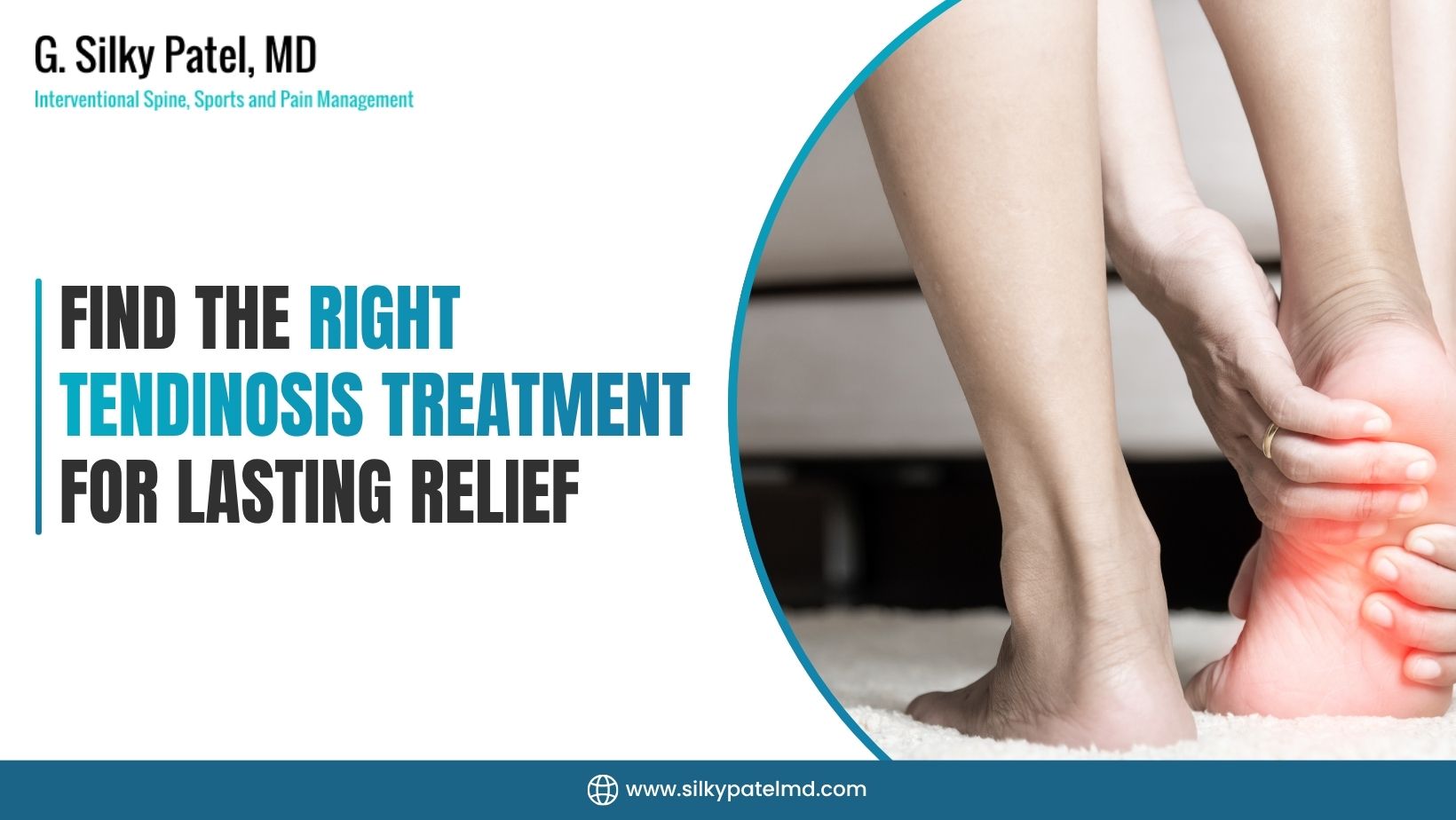
Tendinosis treatment can feel confusing when you are trying to sort out pain that keeps coming back, especially if rest, stretching, or medication has not helped enough.
If you are wondering whether your pain is from tendonitis, tendinosis, or something else entirely, a careful evaluation matters because the right plan depends on the real source of the problem.
In this article, we explain how tendinosis differs from tendonitis, how treatment usually progresses, what a TenJet Procedure may involve for selected patients, how long recovery may take, and what preventive care can help reduce strain going forward.
If you are comparing options in Houston and want a clearer path before meeting with Dr. Silky Patel, this guide is designed to help you ask better questions and make a more informed decision. That is why tendinosis treatment should match the evaluation findings.
Understanding Tendinosis Treatment And Why Diagnosis Comes First
Tendinosis is often discussed alongside tendonitis, but the two are not the same thing. That distinction matters because the treatment plan should match the tissue problem, the location of pain, how long symptoms have been present, and how much the tendon has been irritated over time.
Tendinosis Vs. Tendonitis
Tendonitis usually refers to short-term tendon inflammation, often after a new strain or overuse episode. Tendinosis is more chronic and generally reflects tendon degeneration or wear-related change rather than a simple inflammatory flare.
In practical terms, that means pain may linger, come and go, or worsen with repeated activity even after the original trigger has passed. A stepwise tendinosis treatment plan can reduce guesswork.
Why Mislabeling The Problem Can Delay Progress
If a chronic tendon problem is treated only like a temporary inflammation issue, the plan may not go far enough. Many people try repeated rest periods without understanding why symptoms keep returning.
A more complete evaluation can help determine whether the tendon needs load management, physical therapy, image-guided care, or a procedure such as the TenJet orthopedic procedure in selected cases.
What Dr. Silky Patel Looks At During Evaluation
At Dr. Silky Patel, the goal is to understand where the pain is coming from, what activities provoke it, and whether other nearby structures may be contributing. That review may include your history, exam findings, and, when appropriate, imaging or prior treatment response.
For tendon pain, the diagnosis often guides whether conservative care is still reasonable or whether a different option deserves discussion. The right tendinosis treatment discussion depends on the tendon involved.

Our personalized treatment plans are designed to help you feel better and live better.
How Tendinosis Usually Progresses Before A Procedure Is Considered
Most patients do not start with a procedure. Tendinosis treatment usually begins with conservative care, and that stepwise approach helps avoid unnecessary intervention while still giving the tendon a chance to calm down under the right conditions.
Common Early Treatment Steps
Initial care often focuses on reducing aggravating activity, adjusting exercise or work habits, and using a structured rehab plan. Depending on the location and severity, treatment may also include anti-inflammatory strategies if appropriate, bracing or support, and a physical therapy program designed to improve load tolerance rather than simply rest the area indefinitely.
When Conservative Care May Not Be Enough
When pain has become persistent, function is limited, or the same tendon keeps flaring despite a good-faith rehab effort, it may be time to reassess the plan. That does not mean every nonoperative option has failed, but it does mean the tendon may need a more targeted approach based on the exact diagnosis.
How The Decision For A TenJet Procedure Is Usually Made
The TenJet Procedure is not something everyone with tendon pain needs. It may be discussed when symptoms and exam findings suggest chronic tendinosis and when Dr. Silky Patel believes a minimally invasive procedure could be reasonable as part of a broader care plan.
The key question is not simply whether pain exists, but whether the tendon problem and the patient’s goals fit the procedure being considered. Tendinosis treatment should reflect how long symptoms have been present.
A Simple Treatment Progression Framework
A useful way to think about progression is: start with diagnosis, then conservative management, then reassess response, and only then consider whether a procedure belongs in the plan. That sequence helps avoid rushing into treatment before the full picture is clear.
Our personalized treatment plans are designed to help you feel better and live better.
Where The TenJet Procedure Fits In Tendinosis Treatment
For some patients, the TenJet Procedure is discussed as a minimally invasive option for chronic tendon pain that has not responded enough to earlier treatment.
It is a tool for selected cases, not a universal solution, and the right fit depends on the tendon involved, the degree of chronic change, and overall goals. A clear tendinosis treatment plan also considers activity goals.
What The TenJet Orthopedic Procedure Is Meant To Do
In simple terms, the procedure is intended to address damaged tendon tissue in a targeted way under image guidance. The main goal is to support symptom management by focusing treatment where the tendon has not improved with less invasive care. Because every patient is different, Dr.
Silky Patel evaluates whether this type of approach makes sense for the specific tendon and clinical situation.
What Patients Often Want To Know Before Choosing It
Most people want to know how involved the procedure is, how soon they may resume daily activity, and what the recovery experience feels like. Those are reasonable questions. They also need to know that results vary, follow-up matters, and the procedure is only one part of the overall plan.
This helps keep the plan practical and individualized.
How Long Does TenJet Take?
How long does TenJet take? In many cases, the procedure itself is relatively short, but total time at the facility includes preparation, monitoring, and discharge instructions. Exact timing can vary based on the tendon being treated, image guidance, and the patient’s individual needs, so Dr.
Silky Patel’s team can give the most accurate expectation during planning.
What Makes Candidacy Important
Not every tendon problem is a good procedural match. Candidacy depends on symptoms, exam findings, duration of pain, prior response to care, and whether the tendon problem appears chronic rather than acute. That is why a careful evaluation matters more than the name of the procedure alone.
Treatment decisions should be based on the diagnosis, not assumptions.
What To Expect From Recovery, Results, And Follow-Up
Recovery after a tendon procedure is not just about the procedure day. It is about how the tendon responds over time, how activity is resumed, and whether the surrounding muscles and movement patterns are supported well enough to avoid repeated overload.
Typical Recovery Timeline Questions
Many patients want a clear answer to how soon they will feel better. The honest answer is that timelines vary. Some people notice early changes in comfort or function, while others need more time as the area settles and activity is reintroduced gradually. Dr.
Silky Patel usually helps set realistic expectations based on the tendon involved and the overall treatment plan. Dr. Patel can review tendinosis treatment options after confirming the likely source.
What The First Phase Of Recovery May Look Like
Right after the procedure, the focus is usually on protecting the area, following activity guidance, and avoiding the kind of strain that could interfere with the early recovery period. Depending on the tendon treated, there may be temporary soreness, stiffness, or sensitivity before the area begins to tolerate more use.
Why Follow-Up Matters
Follow-up is important because tendon pain rarely improves from one step alone. A good plan may include activity modification, rehabilitation guidance, and a gradual return to normal movement. That progression helps the tendon and surrounding tissues adapt without being overloaded too soon.
Realistic Expectations For Symptom Improvement
No procedure can promise a specific outcome. The goal is to help reduce pain and improve function in certain patients, but symptom changes depend on the underlying diagnosis, the tendon’s condition, and how well recovery recommendations are followed. Setting that expectation early often leads to better decision-making later.
Good tendinosis treatment planning also looks at load, movement, and recovery.

Connect with our team to discuss your concerns, learn about our treatments, and find out how to get started as a new patient.
How To Compare Tendinosis Treatment Options Before Deciding
A practical comparison helps patients see where each option fits. The best choice is not always the most aggressive one; it is the one that matches the diagnosis, the duration of symptoms, and the patient’s activity demands.
| Treatment Option | Best For | Typical Goal | Key Consideration |
|---|---|---|---|
| Activity modification and rest | Early or mild tendon irritation | Reduce strain and calm symptoms | Helpful early, but often not enough for chronic pain |
| Physical therapy | Tendon pain that needs load management and movement retraining | Improve function and tolerance to activity | Requires consistency and the right exercise progression |
| Medications or anti-inflammatory strategies | Short-term symptom relief when appropriate | Ease pain and support daily function | May not address chronic tendon change |
| Image-guided procedures, including TenJet in selected patients | Chronic tendinosis that has not improved enough with conservative care | Target the symptomatic tendon area | Candidacy depends on diagnosis, tendon involved, and goals |
Why Comparison Helps Patients Decide
A side-by-side view makes it easier to see when treatment is still in the conservative stage and when a procedure may deserve discussion. It also helps patients avoid assuming that a procedure is automatically the next step just because pain has lasted a long time. A personalized tendinosis treatment approach can change as symptoms change.
TenJet Procedure Cost And Planning Questions
TenJet Procedure Cost can vary depending on the facility, tendon treated, imaging needs, insurance benefits, and whether additional services are part of the visit. Because those details are not the same for everyone, it is best to verify the estimate directly with Dr. Silky Patel’s office before making a final decision.
What To Ask Before Scheduling
If you are comparing TenJet Near Me options, ask how the diagnosis was made, whether conservative care was tried long enough, what recovery planning looks like, and what the expected next steps will be after the procedure. Those questions help you compare more than just location or convenience.
The tendinosis treatment conversation should include limits, risks, and follow-up.
How To Lower The Chance Of Tendon Pain Coming Back
Even when a procedure is part of the plan, long-term tendon care still matters. Preventive care helps reduce repeat overload and gives patients a better chance of maintaining comfort during work, exercise, and daily activity.
Focus On Load, Not Just Rest
One common mistake is resting until pain fades and then returning to the same workload too quickly. Tendons usually respond better to gradual load progression, where activity increases in a controlled way instead of all at once. Tendinosis treatment may involve more than one step over time.
Strength And Movement Habits Matter
Balanced strength around the affected area can reduce strain on the tendon itself. That may include improving hip, shoulder, calf, or forearm mechanics depending on where the pain is located. Small movement changes can matter just as much as the treatment itself.
Watch For Early Warning Signs
Tenderness that returns with the same activity, stiffness after exercise, or pain that lingers longer than expected may mean the tendon is being overloaded again. Catching those signs early can help prevent a more frustrating setback. This makes tendinosis treatment a guided process rather than a quick guess.
Practical Prevention Tips
- Build activity back gradually after a flare or procedure.
- Follow rehab guidance instead of returning to full intensity too quickly.
- Pay attention to footwear, equipment, posture, and technique when relevant.
- Reassess recurring pain rather than assuming it will disappear on its own.
When To Re-Evaluate With Dr. Silky Patel
If pain keeps returning, function is still limited, or you are unsure whether the issue is tendinosis or tendonitis, a fresh evaluation may be the most useful next step. Dr. Silky Patel can help determine whether the current plan still fits or whether a different approach should be discussed.
A Note From Dr. Silky Patel
Tendinosis treatment works best when the diagnosis is clear and the plan matches the stage of the tendon problem. In many cases, that means starting with conservative care, reassessing honestly, and considering a procedure such as the TenJet Procedure only when it fits the patient’s condition and goals.
If you are dealing with tendon pain that keeps returning, the next step is not guessing. It is getting a careful evaluation, understanding your options, and choosing a plan that makes sense for your body and your daily demands. That is the approach we use when helping patients compare tendinosis treatment options in Houston.