Table of Contents
ToggleRadiofrequency ablation procedure can be a helpful option when pain keeps returning and simpler measures have not provided enough relief. If you are trying to understand what the treatment involves, how it feels, and whether it may fit your situation, this guide breaks it down in plain language.
The goal here is to help you make a more informed decision before meeting with Dr. Silky Patel in Houston or discussing care with another pain specialist.
You will learn how the procedure is done, what to expect before and after treatment, what recovery is usually like, and which questions matter most when you are comparing options for ongoing pain. That is where a radiofrequency ablation procedure may become part of the discussion.
What Radiofrequency Ablation Is And When It Is Considered
Radiofrequency ablation is a minimally invasive procedure used in pain medicine to target small nerves that carry pain signals. In practical terms, the treatment aims to interrupt those signals so pain may feel less intense in certain patients.
This section matters because many people hear the term and assume it is a surgery or a one-size-fits-all fix. It is neither. The procedure is usually considered after careful evaluation, and it is best understood as one option in a broader pain management plan.
A radiofrequency ablation procedure is usually considered after the pain source is carefully evaluated.
The Basic Idea Behind The Procedure
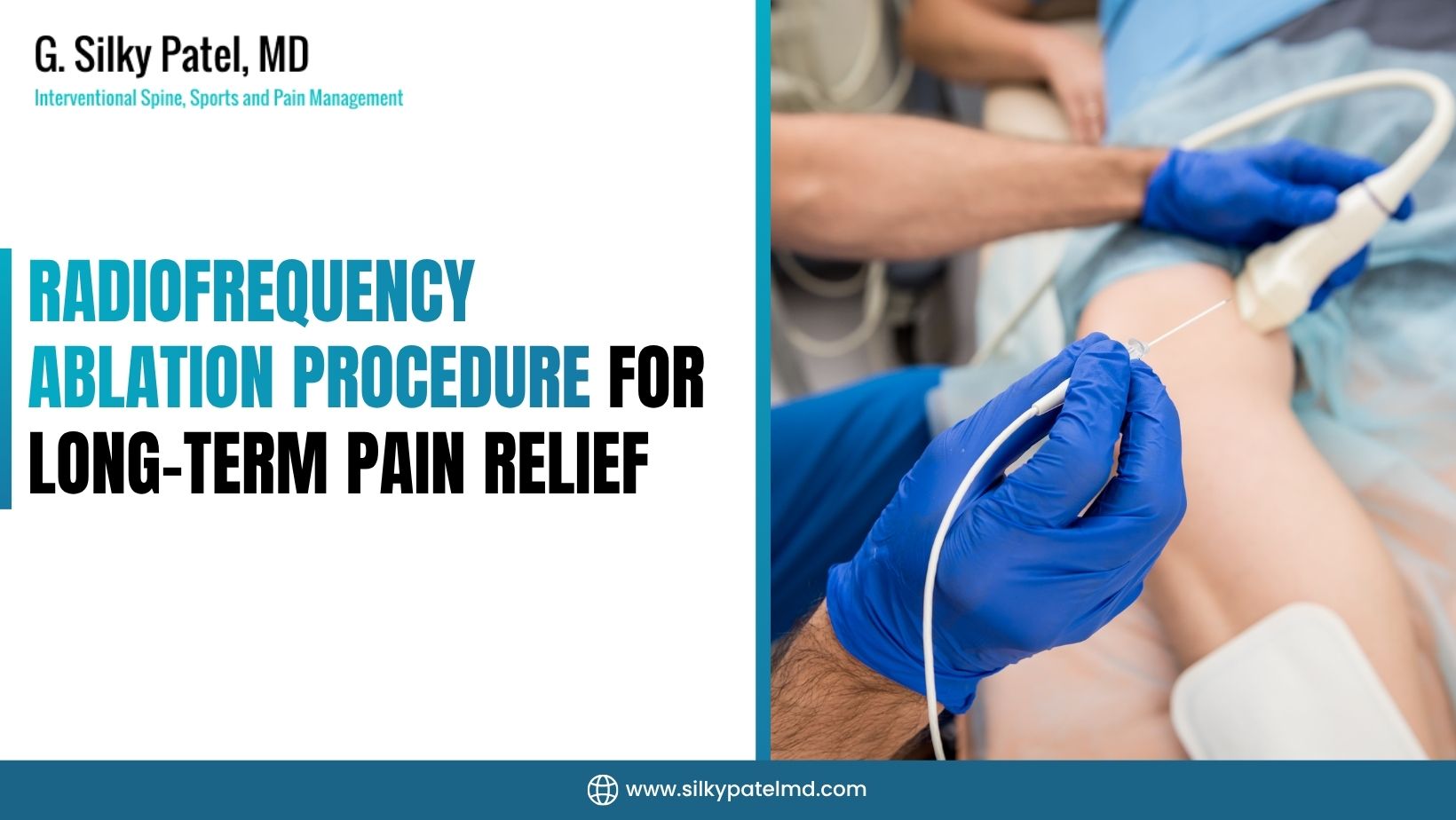
During the radiofrequency ablation procedure, a specialized needle-like device is guided to a specific nerve area. Controlled heat is then delivered to help reduce the nerve’s ability to transmit pain signals. That general concept is why people sometimes hear the term radio frequency surgery, even though the treatment is not the same as open surgery.
Conditions It May Be Used For
Dr. Silky Patel evaluates people with pain patterns that may involve the facet joints, the sacroiliac joint, or degenerative disc disease. In those situations, the treatment may be discussed when the pain source appears to be coming from small nerves that can be targeted.
Why A Careful Diagnosis Matters
Radiofrequency Ablation for Back Pain only makes sense when the pain source has been identified as clearly as possible. If the pain generator is not well understood, the procedure may not match the real problem. That is why diagnostic evaluation, exam findings, and prior response to conservative care all matter before moving forward.
How The Radiofrequency Ablation Procedure Is Planned
A good outcome starts before the day of treatment. Planning helps reduce surprises, improves safety, and makes it easier for you to know what to expect. The radiofrequency ablation procedure conversation often starts with diagnostic results.
This section walks through the preparation steps that commonly matter, along with the questions patients should ask before scheduling. It also helps explain why some people are candidates while others are not.
Evaluation And Candidacy
Before recommending the procedure, Dr. Silky Patel reviews the pain location, symptom pattern, prior treatments, imaging when appropriate, and response to earlier therapies. In many cases, the decision is based on whether the pain appears to come from a specific nerve pathway rather than a broader or unrelated problem.
This helps show whether a radiofrequency ablation procedure fits your goals.
What You May Be Asked To Review Before Treatment
Before the procedure, you may need to discuss:
- Current medications, especially blood thinners or anti-inflammatory medicines
- Allergies, including medication or contrast concerns if relevant
- Recent infections, fever, or other health changes
- Prior procedures and how much relief they provided
- Any implanted devices or major medical conditions
How To Prepare On The Day Of Treatment
Preparation instructions vary, so always follow the specific directions you are given. In general, patients are often asked to arrange a ride home, wear comfortable clothing, and avoid eating or drinking if sedation is planned. If any medication changes are needed, those instructions should come directly from Dr. Patel’s office.
This procedure should be discussed with realistic expectations.
Common Questions To Ask Before Scheduling
It often helps to ask how the procedure fits your diagnosis, whether it is being used for the neck, mid back, low back, or SI joint region, and what the realistic goals are. You can also ask how recovery is usually handled and what signs would mean you should call the office after the procedure.
What Happens During RFA?
Many patients want the short version before they read the details. What happens during RFA? A pain specialist uses imaging guidance to place the treatment device near the targeted nerve, checks positioning carefully, and then delivers controlled heat to change how that nerve transmits pain signals.
This section explains the process step by step so you know what the visit may feel like from start to finish. Understanding the sequence often lowers anxiety more than any general reassurance can. Your response to prior testing can guide the radiofrequency ablation procedure decision.
Step One: Check-In And Positioning
After check-in, you are positioned so the treatment area is accessible and comfortable. The skin is cleaned, and the team prepares the area according to the procedure plan.
Step Two: Local Anesthetic And Imaging Guidance
A local numbing medicine is typically used to help reduce discomfort at the skin and deeper tissue level. Imaging guidance, such as fluoroscopy, helps the specialist place the treatment instrument with precision. A clear diagnosis makes the radiofrequency ablation procedure easier to understand.
Step Three: Confirming The Target Nerve
Before treatment begins, the placement is checked so the correct nerve region is targeted. This step matters because the procedure is most useful when the pain source has been identified and the device is in the right location.
Step Four: Delivering The Radiofrequency Energy
Once placement is confirmed, controlled radiofrequency energy is delivered for a short period. Patients may feel pressure, warmth, or brief discomfort, but sensations vary. The radiofrequency ablation procedure plan should match your pain pattern.
Step Five: Monitoring Before You Leave
After the treatment portion is complete, you are monitored briefly to make sure you are stable enough to go home. Most patients are able to return the same day, but exact discharge instructions depend on the treatment plan and whether sedation was used.
Is Radiofrequency Ablation Painful And What Recovery Looks Like
A common concern is whether the procedure is painful and how much downtime to expect. The honest answer is that some discomfort is possible, but it is usually managed with local numbing medicine and careful technique. For some people, RFA may help reduce chronic pain by targeting specific nerves that contribute to pain signals.
This section explains what people often feel during and after treatment, as well as what recovery may look like in the first several days. That helps you distinguish expected soreness from symptoms that deserve a call to the office. This is why a radiofrequency ablation procedure is not chosen from imaging alone.
What Patients Often Feel During Treatment
Is Radiofrequency Ablation Painful? It can be uncomfortable at moments, especially when the treatment instrument is positioned and the nerve region is activated. Many patients describe this more as pressure, aching, or a brief sharp sensation rather than severe pain.
Common Short-Term Reactions After Treatment
It is normal to have some tenderness, soreness, or temporary flare-up around the treatment area afterward. Some people also feel tired the same day, especially if sedation was used. These short-term effects do not necessarily mean the procedure was unsuccessful. A radiofrequency ablation procedure may be considered when the target is clear.
Typical Recovery Expectations
Many patients resume light activity fairly quickly, but recovery instructions vary based on the location treated and the overall pain plan. A lumbar radiofrequency ablation may have different movement advice than treatment in a different region, so follow the personalized directions provided after your procedure.
When To Call The Office
You should contact Dr. Patel’s office if you develop increasing redness, fever, severe or worsening pain, new weakness, or other symptoms that seem out of proportion. It is always better to report concerning changes early rather than assume they will settle on their own. Dr.
Patel reviews whether a radiofrequency ablation procedure fits the overall care plan.
How Effective Radiofrequency Ablation May Be And What Influences Results
People often ask about success rates, but the answer is not as simple as one number. The benefit of this treatment varies by diagnosis, nerve target, technique, and how well the pain source was identified beforehand.
This section helps set realistic expectations. That matters because a careful, honest discussion of likely benefit is far more useful than a promise that every patient will respond the same way.
Why Success Rates Vary
Success rates are influenced by the underlying cause of pain, how well the diagnostic work-up matched the treatment target, and whether the pain is truly coming from the intended nerves. The same procedure may help one patient more than another even when both have back pain.
The goal of a radiofrequency ablation procedure discussion is informed decision-making.
What Counts As A Meaningful Response
For some patients, meaningful improvement may mean less pain during daily activities, longer periods of comfort, or improved tolerance for walking, sitting, or sleep. For others, the main value may be reducing reliance on repeated temporary treatments. The goal should be individualized, not measured by someone else’s experience.
Why Repeat Evaluation Still Matters
Pain can change over time. Even if the procedure helps, follow-up matters because new symptoms or a shift in pain pattern may mean the treatment plan needs to be adjusted. Dr. Silky Patel uses follow-up visits to reassess whether the original pain source still appears to be the main issue.
This treatment can be part of a stepwise pain plan.
Questions Patients Often Ask Before Choosing This Treatment
Most people are not just asking what the procedure is. They are asking whether it fits their pain pattern, how it compares with other options, and what trade-offs they should expect, including the potential side effects of treatment. This section addresses the concerns that usually come up when someone is deciding whether to move forward.
How It Compares With Other Non-Surgical Options
Radiofrequency ablation is usually discussed after simpler measures have not provided enough relief or when pain continues to return. Depending on the diagnosis, other options may include medications, physical therapy, activity changes, or targeted injections. The best plan depends on which treatment matches the actual source of pain.
Before a radiofrequency ablation procedure, the expected role should be clear.
What Makes Someone A Better Candidate
Good candidates usually have a pain pattern that can be linked to a specific nerve target and a history that suggests the area can be treated effectively. People with diffuse pain, unclear symptoms, or a diagnosis that does not match the target may need a different approach.
What To Know About Long-Term Planning
Even when the procedure helps, pain care is rarely a one-step process. Some patients need a combination of treatments, lifestyle adjustments, and follow-up monitoring. Thinking of the procedure as part of a long-term plan makes it easier to decide whether it fits your goals.
Why A Pain Medicine Evaluation Helps
A consultation with a Radiofrequency Ablation Doctor Houston patients trust can help clarify whether the pain pattern truly matches the treatment target. At Dr. Silky Patel, the focus is on evaluation first, then recommending an option only when the clinical picture supports it. After a radiofrequency ablation procedure, tracking daily function can be helpful.
A Note From Dr. Silky Patel
If you are considering a radiofrequency ablation procedure, the most important next step is not rushing to treatment but confirming whether the pain source truly fits the procedure. The right match matters more than the name of the treatment.
At Dr. Silky Patel, we focus on careful evaluation, clear education, and individualized planning so you can make a decision with realistic expectations. If you are dealing with ongoing back or joint-related pain, a focused pain medicine visit can help you understand whether radiofrequency ablation belongs in your care plan.