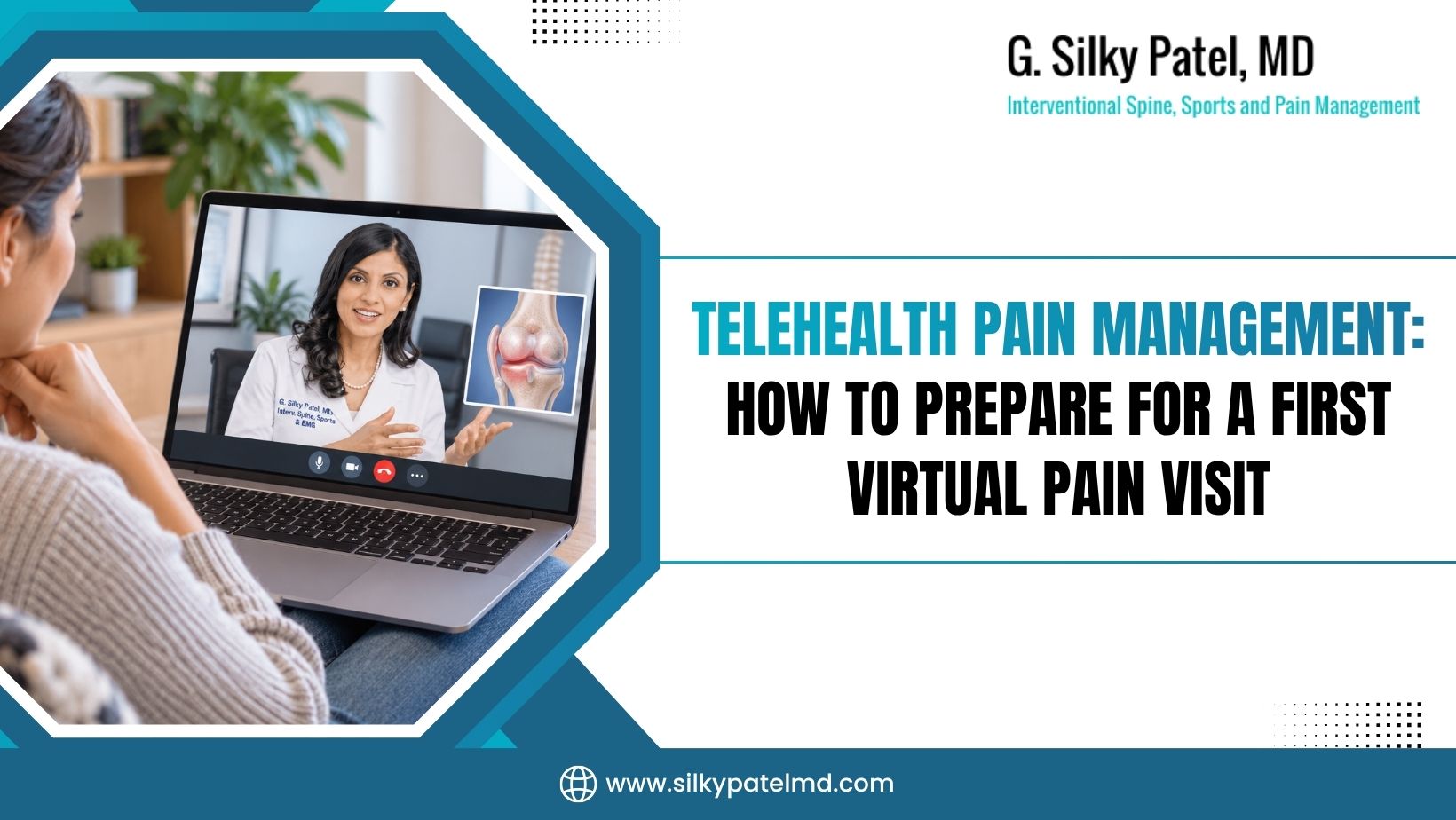
Telehealth pain management can make it easier to discuss ongoing pain, review prior treatment, and plan next steps without traveling to an office, but a productive first virtual visit still requires preparation.
Knowing what to book, what information to gather, and what to expect can help you use the appointment time well.
This guide walks through the process from scheduling and technology checks to medical records, medication information, privacy, remote assessment, and follow-up planning. It also explains when Dr. Patel may recommend an in-person examination or another type of evaluation.
Telehealth Pain Management: What to Do Before You Book
The first step is confirming that a virtual visit is appropriate for your concern and understanding what the appointment can accomplish.
Telehealth, telemedicine, and virtual medical visits are often used interchangeably in everyday conversation, but the practical question is simpler: can your current needs be evaluated safely and usefully through a video visit?
When discussing telehealth pain management, Dr. Patel can help determine whether a virtual pain consultation fits your symptoms, prior treatment, and goals. Availability, appointment types, insurance coverage, and state-related requirements may vary, so confirm those details when scheduling rather than assuming that every pain service is available by video.
Decide What You Want From the Visit
Before booking, write down the main reason for the appointment in one or two sentences. For example, you might want to discuss back pain that has continued despite home care, review an imaging report, understand why symptoms have changed, or ask whether an interventional option should be considered.
As part of telehealth pain management, a clear goal does not need to be a diagnosis. In fact, trying to identify the diagnosis before the visit can sometimes narrow the conversation too early.
A better starting point is describing what has changed, what limits you, and what you have already tried.
Think about these questions:
- Where is the pain, and when did it begin?
- What activities, positions, or times of day make it better or worse?
- What would you most like to be able to do more comfortably?
Confirm the Appointment Details
When arranging telehealth pain management, ask how the visit will take place, whether video is required, what device is recommended, and whether forms must be completed beforehand. Confirm the time zone, especially if you are traveling or temporarily staying outside your usual area.
Ask whether records or imaging should be sent before the visit and how they should be submitted. Do not email sensitive medical information through an unapproved channel. Use the method provided by the practice or ask the scheduling team for instructions.
If you are searching for telehealth pain management near me, remember that location can still matter.
State licensing rules, insurance policies, and the location where you are physically present during the visit may affect whether a virtual appointment can proceed. Tell the scheduling team where you expect to be at the time of the appointment.
Read also: How to Relieve Upper Back Pain Fast and Safely Today
Know When a Virtual Visit May Not Be Enough
A video visit may be a practical starting point, but it is not the right format for every situation. Severe or rapidly changing symptoms, concerns that require an in-person examination, or a need for a procedure may require a different plan.
Seek urgent medical attention for emergency symptoms such as new loss of bladder or bowel control, sudden severe weakness, major trauma, chest pain, difficulty breathing, or other symptoms that feel immediately dangerous. Telehealth should not delay emergency evaluation.

Our personalized treatment plans are designed to help you feel better and live better.
How to Prepare Your Technology and Appointment Space
With telehealth pain management, technical issues can take up valuable time during your first virtual visit if they are discovered at the last minute. Before your scheduled televisit, take a few minutes to check your internet connection, update the required application, and make sure you can access the appointment link. This gives you enough time to resolve any issues or contact the practice if the invitation isn’t working.
Complete a Basic Technology Check
Use the device you plan to use for the appointment and check the camera, microphone, speaker, and internet connection.
If possible, use a stable Wi-Fi connection and keep the device charged or connected to power. Headphones may improve sound quality and reduce the chance that others nearby will hear the conversation.
For your first telehealth pain management visit, open the visit link or platform according to the instructions provided by the practice.
Some systems work through an internet browser, while others require an application. If the platform asks for permission to use your camera and microphone, review those settings before the appointment begins.
Keep the appointment message, confirmation email, or instructions available. If the video connection fails, you will want to know how to contact the practice and whether the visit can continue by another approved method.
Do not assume that a telephone call automatically replaces a video appointment; that depends on the visit type and practice procedures.
Choose a Private, Well-Lit Space
Before a telehealth pain management visit, choose a quiet location where you can speak openly about pain, medications, sleep, mood, work, and daily limitations.
A private room is preferable to a car, a busy workplace, or a public area. If another person will be present, let Dr. Patel know who is in the room and why you want that person included.
As part of telehealth pain management, place the camera at roughly eye level and position yourself so your face is visible. Good lighting should come from in front of you rather than directly behind you. Keep the device steady instead of holding it while walking around the home.
For a spine or musculoskeletal concern, Dr. Patel may ask you to demonstrate a movement or briefly show where symptoms occur.
Wear comfortable clothing that allows safe movement without requiring you to expose more of your body than necessary. Never attempt a movement that feels unsafe simply to make the video easier.
Have a Backup Plan Without Sacrificing Privacy
If the connection drops during your first telehealth pain management visit, stay near the device and follow the practice’s instructions. Keep your phone available in case the care team needs to contact you, but avoid switching to an unapproved communication method for sensitive information.
If you are driving, working, or caring for children during the appointment, rescheduling may be safer and more productive. A virtual visit requires enough attention to describe symptoms accurately and follow instructions from Dr. Patel.
Our personalized treatment plans are designed to help you feel better and live better.
What Medical Information to Gather Before the Visit
When preparing for telehealth pain management, a virtual pain consultation is much more useful when Dr. Patel can review the story of your symptoms rather than only the location of pain.
You do not need to create a perfect medical file. A simple, organized summary is usually more helpful than a large collection of documents with no explanation.
Prepare a Short Symptom Timeline
Write down when the pain began and whether it started suddenly or gradually. Note any event that preceded it, such as lifting, a fall, an accident, a change in exercise, or a medical procedure. Include whether symptoms have stayed the same, improved, worsened, or changed location.
Describe the pain in ordinary language. Burning, aching, sharp, electric, pressure-like, tight, and throbbing can all provide useful context. Also mention numbness, tingling, weakness, balance changes, sleep disruption, or difficulty sitting, standing, walking, lifting, or working.
For telehealth pain management, pain intensity can be useful, but it is only one part of the picture. Explain what you could do on a better day compared with a difficult day.
A practical example might be, “I can stand for about 15 minutes before I need to sit,” rather than only reporting a numerical pain score.
Gather Records and Imaging Reports
With telehealth pain management, collect the names and dates of relevant tests, procedures, therapy programs, and consultations.
If you have imaging, the written report is important, but the actual images may also be useful if they can be shared through an approved system. Include records related to the current problem rather than sending every medical document you have.
If another practice has treated you, request records early because transfer time can vary. Important information may include prior treatment response, physical therapy notes, procedure reports, imaging reports, and relevant medical history.
Do not assume that an imaging finding explains every symptom. Back and neck imaging can show changes that do not match the location or severity of pain. Dr. Patel considers the history, functional limitations, examination findings when available, and test results together.
Make an Accurate Medication List
If you’re considering telehealth pain management, prepare the name, strength, dose, and schedule for every prescription medicine, over-the-counter product, vitamin, and supplement you take. Include medications used only occasionally. Bring attention to recent changes, medicines you stopped, and any medication that caused a side effect or did not help.
A medication bottle list or pharmacy medication record may be useful, but review it for accuracy. Include allergies and the reaction you experienced. “It made me feel unwell” is less helpful than describing whether you developed a rash, swelling, nausea, dizziness, or another reaction.
If you’re considering telehealth pain management, never start, stop, increase, decrease, or share prescription medication based only on general information from a website or a virtual conversation. Medication decisions depend on your history, other medicines, safety risks, and the treatment plan established with Dr. Patel.
Prepare Information About Previous Care
Write down what you have tried and what happened afterward. Include home exercises, formal physical therapy, heat or ice, activity changes, medications, injections, and other treatments. A treatment that did not help is still useful information because it may affect what Dr. Patel considers next.
Try to describe the result precisely. “Physical therapy failed” does not explain whether symptoms worsened, whether exercises were difficult to complete, or whether mobility improved even though pain remained. Specific details make the discussion more productive.

Connect with our team to discuss your concerns, learn about our treatments, and find out how to get started as a new patient.
What Dr. Patel Can Assess Through a Virtual Pain Visit
During telehealth pain management, many important parts of pain care involve listening carefully, reviewing records, understanding function, and clarifying goals. These parts can often begin remotely. Telehealth is not simply a shorter version of an office visit; it is a different way to collect information and plan care.
History, Symptoms, and Daily Function
Before a telehealth pain management visit, Dr. Patel can ask detailed questions about the pattern of pain, related symptoms, sleep, activity, work demands, previous treatment, and medical history.
This conversation may help identify whether symptoms sound more related to the spine, joints, nerves, muscles, medication effects, or another issue that needs further evaluation.
When preparing for telehealth pain management, you may be asked to describe movements that increase symptoms or demonstrate how you walk, stand, sit, or move an arm. These observations are not a replacement for a hands-on examination, but they can add useful context when performed safely in a suitable space.
Review of Records and Test Results
A virtual appointment can be helpful for reviewing imaging reports, discussing prior procedures, and deciding whether additional information is needed. Dr. Patel may explain what a report does and does not show and how it relates to your symptoms.
In a telehealth pain management appointment, this is also an opportunity to ask why a test, treatment, or referral is being considered. Understanding the purpose of the next step helps you weigh its potential value, limitations, and practical demands.
Treatment Planning and Education
Depending on the evaluation, the discussion may include activity guidance, medication questions, physical therapy considerations, additional diagnostic evaluation, or whether an in-person visit is needed. The appropriate plan depends on the diagnosis being considered, your medical history, safety factors, and your goals.
In a telehealth pain management appointment, a virtual visit can also help establish what success should look like. For some people, that may mean tolerating a longer walk, sleeping more comfortably, returning to a task, or reducing reliance on certain activities that aggravate symptoms. Clear goals make follow-up more meaningful.
What Telehealth Cannot Fully Replace
During telehealth pain management, video limits the ability to perform hands-on testing. Dr. Patel may not be able to assess strength, reflexes, sensation, joint stability, tenderness, gait, or other findings with the same detail possible in person.
Camera angle, lighting, clothing, and the safety of self-directed movement can also limit what is visible.
For that reason, a virtual assessment may lead to an in-person examination rather than a final treatment decision. That is not a failure of telehealth. It is a safety-based decision to obtain information that cannot be collected reliably through video.
When an In-Person Evaluation May Be Necessary
A key benefit of telehealth pain management is that it can begin the evaluation without requiring immediate travel, but remote care should be used within its limits.
Dr. Patel may recommend an office visit when the next decision depends on physical findings, a procedure is being considered, or symptoms require closer evaluation.
Situations That May Need Hands-On Assessment
For telehealth pain management, an in-person visit may be appropriate when there is new or progressive weakness, uncertain numbness, a significant change in walking, unexplained swelling, symptoms after an injury, or a need to examine a specific joint or area of the spine.
The exact recommendation depends on the full history and any available records.
An office evaluation may also be needed before certain interventions. Dr. Patel may need to confirm the pain source, review relevant safety information, examine the treatment area, or discuss the procedure in greater detail before deciding whether it is appropriate.
How to Respond if the Visit Changes Direction
If Dr. Patel recommends an in-person evaluation following telehealth pain management, ask what information the visit is intended to provide and whether any records or imaging should be brought. Understanding the reason helps you prepare and prevents the next appointment from becoming another general conversation with missing information.
Ask whether there are precautions before the visit, such as bringing a medication list, arranging transportation, or avoiding a particular activity. Requirements can vary by the type of evaluation or procedure, so follow the specific instructions provided by the practice.
Do Not Use Telehealth to Delay Urgent Care
Virtual care is not a substitute for emergency services. New severe weakness, loss of bladder or bowel control, saddle numbness, major trauma, severe chest symptoms, trouble breathing, confusion, or rapidly worsening symptoms require prompt medical attention through the appropriate emergency channel.
When symptoms are concerning but not clearly emergent, explain the change to the scheduling team and follow the guidance provided. Describe what changed, when it changed, and whether you have difficulty walking, using an arm, breathing, or staying alert.
How Privacy and Follow-Up Care Fit Into Telehealth Pain Management
A successful virtual appointment includes more than logging into a video platform. You should understand how information is handled, how recommendations will be documented, and how you will know what to do after the visit.
Protect Your Health Information
Use a private room and a trusted internet connection when possible. Avoid discussing sensitive medical details in a public place or while connected to an unsecured shared device. Keep printed records and medication containers out of view of people who do not need access to them.
Before a telehealth pain management visit, before the visit, confirm that you are using the official link or platform supplied by the practice.
Do not send medical records, photographs, medication information, or identification through social media or an unfamiliar website. If you are unsure how to share something, ask the practice for the approved method.
You should also tell Dr. Patel if anyone else is present or listening. If a family member helps with technology or communication, that person can be introduced at the beginning of the appointment.
Clarify the Follow-Up Plan Before Ending the Visit
Before signing off, make sure you know the next step. That may include obtaining records, completing an evaluation, trying a specific conservative measure, scheduling an in-person visit, or arranging follow-up. Ask when you should expect instructions and whom to contact if questions arise.
When preparing for telehealth pain management, write down any medication changes, activity recommendations, tests, referrals, or warning signs discussed. If the plan includes monitoring symptoms, record what you are tracking and how often. A simple symptom and activity log can show whether function is changing over time.
Follow-up timing depends on the concern and plan. Some people need an in-person assessment before moving forward, while others may begin with record review or a planned check-in. Do not assume that no immediate appointment means no follow-up is needed; confirm the plan directly.
Make the Visit Useful for the Next Decision
During telehealth pain management, the strongest virtual visits usually end with a shared understanding of three points: what is known, what remains uncertain, and what information will help decide the next step. If you are unsure about any of those points, ask before the appointment ends.
For patients considering telemedicine pain management in Houston or elsewhere, the practical goal is not simply avoiding a trip. It is receiving an appropriate evaluation in the right format, with a clear path for additional examination or treatment when necessary.
Dr. Patel can help determine whether a virtual visit is a suitable starting point based on your symptoms and medical information.
A Note from Dr. Silky Patel
A first virtual pain visit works best when you arrive ready to describe your symptoms, daily limitations, previous care, medications, and goals. Telehealth pain management can be a useful way to begin that conversation, review available information, and decide whether remote care is enough for the next step.
I also want patients to understand that recommending an in-person examination is sometimes the safest and most informative choice. The purpose of the evaluation is to match the visit format and treatment discussion to your needs, not to force every concern into a virtual appointment.
Prepare your questions, protect your privacy, and speak openly about what has changed and what you hope to do next.