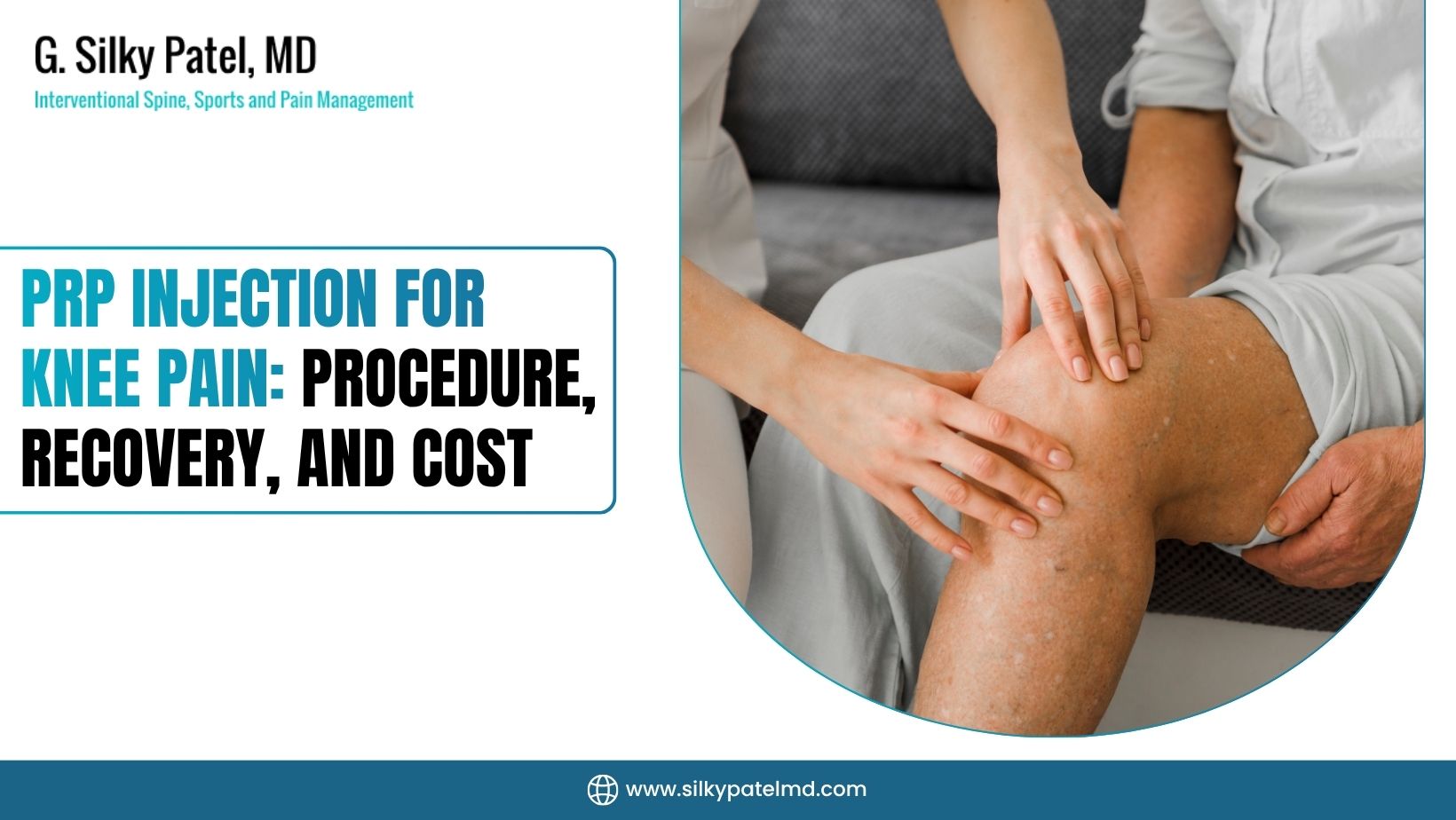
PRP injection for knee pain may be an option when ongoing discomfort, stiffness, or reduced function has not improved enough with initial care and you want to understand alternatives before choosing a care option.
The important questions are not only whether PRP is available, but whether it fits your diagnosis, goals, medications, and overall knee health.
This guide explains what a PRP knee injection involves, how candidacy is evaluated, what recovery may look like, and why PRP injection cost varies. It also explains what to ask during a consultation with Dr. Silky Patel in Houston so you can make a careful, informed decision.
What Is a PRP Injection for Knee Pain?
PRP is an orthobiologic option that may be considered for selected patients after evaluation and diagnosis. It is designed to support the body’s natural healing response and may help reduce pain or improve function in certain patients. Results vary depending on the patient and condition.
How PRP May Fit Into Knee Pain Care
Knee pain can come from several sources, including joint irritation, irritation of surrounding soft tissues, an injury, referred pain, or a combination of problems. Because the injection is directed toward a particular pain source, a careful evaluation matters before discussing PRP.
Candidacy for a PRP injection for knee pain is based on evaluation and diagnosis.
PRP is generally considered an option for symptom management, and results vary depending on the patient and condition. It does not replace the need to identify the source of pain, address contributing factors, or consider other care options.
Depending on the evaluation, the broader plan may include activity changes, targeted exercises, medication review, physical therapy, or another injection approach. Patient selection is important before a PRP injection for knee pain is considered.
A useful consultation should clarify what the injection is intended to support, what improvement would mean for you, and how progress will be assessed. For example, reducing pain while walking may be a more realistic symptom-support goal than expecting an immediate return to every high-impact activity.
Who May Want to Discuss PRP?
People who may consider a discussion about PRP include those with persistent knee symptoms, a symptom pattern that appears suitable for injection-based care, and goals that can be measured over time. Previous care, imaging findings, physical examination results, and the duration of symptoms all influence the decision.
A PRP injection for knee pain may help reduce pain or improve function in certain patients after appropriate evaluation.
PRP may not be suitable in every situation. Active infection, certain blood or platelet disorders, medication considerations, an unclear pain source, or a need for urgent surgical evaluation may change the recommended approach. Dr. Patel can review these factors and explain whether PRP belongs in the care discussion.
The goal is not to select a procedure simply because it is available. The goal is to match the intervention to the problem being evaluated, while keeping expectations realistic. A PRP injection for knee pain should be discussed in the context of symptoms, function, risks, and alternatives.

Our personalized treatment plans are designed to help you feel better and live better.
Is a PRP Knee Injection Right for Your Symptoms?
The most important step before a PRP knee injection is determining whether the knee is actually the main source of pain and whether the potential symptom-support goals justify the time, cost, and temporary activity limits involved.
A diagnosis based only on where pain is felt may not provide enough information.
Evaluation and Candidacy Factors
Dr. Patel may consider the location and pattern of pain, swelling, instability, range of motion, strength, previous injuries, and how symptoms affect walking, stairs, work, sleep, or exercise.
Imaging may be reviewed when it helps clarify the condition, but imaging findings do not always explain the severity of symptoms by themselves. Candidacy for a PRP injection for knee pain is based on evaluation and diagnosis.
Medication and health history are also relevant. Tell Dr. Patel about prescription medications, over-the-counter pain relievers, supplements, bleeding concerns, allergies, infections, and other medical conditions. Do not stop or change a medication unless Dr. Patel or the prescribing clinician gives you specific instructions.
Your goals matter as much as the diagnosis. Someone seeking modest improvement in walking tolerance may make a different decision from someone hoping to resume demanding sports immediately. Discussing the desired outcome in practical terms helps prevent misunderstandings.
A PRP injection for knee pain is designed to support the body’s natural healing response, and results vary depending on the patient and condition.
Questions to Ask Before Scheduling
Before deciding, ask what symptom source the injection is intended to support, whether other nonsurgical options should be tried or continued, and how the injection will be performed.
It is also reasonable to ask what temporary symptoms may occur, when activity can be adjusted, how follow-up is handled, and what happens if the response is limited. This detail should be reviewed before choosing a PRP injection for knee pain.
Ask for a complete estimate of PRP injection cost rather than assuming the procedure has one standard price. Preparation, the injection itself, imaging guidance when used, follow-up, and related evaluation may be handled differently by different practices. Insurance coverage and payment policies also vary.
If you are searching for “PRP injection near me,” convenience should not be the only factor. Look for a setting where the evaluation, procedure details, risks, expected recovery, and alternatives are explained clearly.
A nearby office is helpful, but an appropriate diagnosis and individualized plan are more important than distance alone. That factor matters when considering a PRP injection for knee pain.

Connect with our team to discuss your concerns, learn about our treatments, and find out how to get started as a new patient.
What Happens During a PRP Injection for the Knee?
Understanding the process can make the decision less stressful. The exact steps may vary according to the practice, the planned injection site, and whether imaging guidance is used. Dr. Patel will explain the planned technique and any preparation instructions that apply to your situation.
Before the Injection
The visit typically begins with a review of your symptoms, medical history, medications, prior care, and goals. The injection site is identified, and the planned approach is discussed. If the evaluation suggests that PRP is not the right option, Dr. Patel may recommend a different next step instead.
Imaging guidance may be considered when appropriate for a PRP injection for knee pain.
Preparation instructions can vary. For that reason, do not rely on general online advice about medications, exercise, eating, or supplements. Follow the specific instructions provided for your appointment and ask questions before the procedure if anything is unclear.
During the Procedure
During the procedure, Dr. Patel focuses on the planned injection site and technique. The knee area is cleaned, and imaging may be used to help guide needle placement when appropriate. PRP is used as an option to help decrease pain and inflammation based on evaluation and diagnosis.
You may feel pressure, brief discomfort, or aching during or shortly after the injection. Procedure details should be reviewed before a PRP injection for knee pain is scheduled.
The procedure itself may be relatively brief, but the appointment also includes evaluation, preparation, consent, and post-procedure instructions. Timing should therefore be confirmed with the office rather than assumed from descriptions of the injection alone.
Questions about a PRP injection for knee pain should include the planned site, risks, alternatives, and aftercare.
Risks and Practical Trade-Offs
Possible concerns include temporary soreness, bruising, bleeding, infection, irritation, or a limited response. The risk profile can vary based on the injection site, health history, medications, and technique. Contact Dr. Patel’s office for specific instructions about symptoms that require prompt attention after the procedure.
A key trade-off is that PRP may involve an out-of-pocket expense and a period of modified activity. Results vary depending on the patient and condition, and a clear discussion of alternatives helps you compare those considerations with the goals of care.
The same consideration can affect whether a PRP injection for knee pain fits the plan.
PRP Injection Recovery Time: What Should You Expect?
PRP injection recovery time is not identical for everyone. Some people notice short-term soreness before symptoms settle, while others experience a different pattern. The timeline depends on the knee condition, injection location, activity level, general health, and instructions provided after the procedure.
The First Few Days
Plan for the possibility of aching or increased sensitivity around the injection site. Arrange your schedule so you are not required to perform demanding physical activity immediately afterward.
Use only the medications and comfort measures recommended by Dr. Patel, because some common pain-relief choices may not fit the plan for every person. Activity changes after a PRP injection for knee pain should follow Dr. Patel’s specific instructions.
Avoid testing the knee by quickly returning to the activity that caused symptoms. A temporary reduction in load can make it easier to distinguish expected post-procedure soreness from a problem that needs evaluation. Your written instructions should take priority over general information in this article.
Returning to Normal Activities
“How long is recovery after PRP injection?” depends on what you do each day and what symptom source the injection is intended to support. Office-based work, walking, lifting, kneeling, running, and sports place different demands on the knee.
Dr. Patel can help you understand when to resume specific activities rather than giving one universal timeline. The recovery plan for a PRP injection for knee pain depends on the injection site, symptoms, and daily demands.
A gradual return is usually easier to manage than an abrupt increase in activity. If symptoms are improving, that does not automatically mean the knee is ready for unrestricted impact. Likewise, a lack of immediate improvement does not necessarily determine the eventual response.
Follow-up helps put changes in context.
When to Contact Dr. Patel
Ask for guidance if pain is severe, worsening rather than gradually settling, or accompanied by concerning symptoms such as significant redness, drainage, fever, marked swelling, new weakness, or other changes described in your post-procedure instructions. Urgent symptoms should not be ignored while waiting for a routine follow-up.
Recovery guidance should be individualized after a PRP injection for knee pain.
Keep track of practical changes, such as walking distance, stair tolerance, sleep disruption, swelling, and the activities you can perform. These details give Dr. Patel more useful information than a single daily pain score and can help determine the next step.
Our personalized treatment plans are designed to help you feel better and live better.
Understanding PRP Injection Cost and Your Next Step
PRP injection cost varies because there is no single standard fee for every patient or practice. The total may depend on the evaluation, preparation process, injection site, use of imaging, follow-up, and the office’s payment policies.
Insurance coverage also varies, so the office and your insurance plan are the appropriate sources for current financial information. Financial details are only one part of deciding whether a PRP injection for knee pain fits your situation.
What to Confirm Before Scheduling
Before scheduling, ask whether the quoted amount includes the consultation, preparation, injection, imaging guidance if planned, and follow-up. Also ask about payment timing, cancellation policies, and whether additional visits or related services may create separate charges. Confirming these details in advance helps prevent an unexpected bill.
Do not compare prices without comparing what is included. A lower advertised fee may not represent the same evaluation or services as another quote. At the same time, a higher price does not predict how an individual patient will respond.
The decision should consider clinical appropriateness, transparent costs, convenience, and the plan for monitoring your symptoms. Cost should be reviewed alongside candidacy when considering a PRP injection for knee pain.
Choosing a PRP Injection Near Me
A search for “PRP injection near me” is often the beginning of the process, not the final decision.
Consider whether the practice evaluates the cause of knee pain, explains alternatives, reviews medication and health factors, provides clear aftercare instructions, and offers a way to address questions after the procedure.
For people in the Houston area, Dr. Silky Patel can discuss whether injection-based pain care is appropriate after reviewing your symptoms and examination findings. The consultation is an opportunity to understand the purpose of PRP, its limitations, recovery considerations, and other options before deciding.
A clear estimate helps you evaluate a PRP injection for knee pain without making price the only factor.
Bring a list of medications and supplements, prior imaging or care information when available, and a short description of your main activity goals. Those details can make the conversation more focused and help Dr. Patel build an individualized plan based on evaluation rather than assumptions.
A Note from Dr. Silky Patel
Knee pain can affect simple decisions, from taking stairs to exercising or getting through a workday. A PRP injection for knee is not a one-size-fits-all answer, and choosing it should begin with a careful evaluation of the pain source, your goals, medical history, expected recovery, and cost.
My goal is to help you understand the available options clearly, including what PRP may and may not offer.
If you are considering a PRP knee injection in Houston, schedule a discussion with Dr. Silky Patel so your next step can be based on an individualized assessment and realistic expectations.